
Type 2 + Type 2 Compatibility 💚💚: Balancing Giving and Receiving
Feb 09, 2026
A relationship between two Enneagram Type 2's can be a beautiful journey of love, generosity, and heartfelt connection. Both partners bring a natural desire to care deeply and support one another, creating a warm and nurturing environment. However, their shared tendency to prioritize others’ needs above their own can also lead to challenges around boundaries, burnout, and unspoken resentments. The key to a thriving Type 2 + Type 2 relationship lies in balancing their giving hearts with healthy self-care and honest communication.
But how compatible are two Type 2's in a romantic relationship? While their mutual desire to help and connect can create profound closeness, their tendency to neglect their own needs can also create tension. Let’s explore what makes this pairing work—and where challenges may arise.
Understanding the Type 2 Personality in Relationships 💑🏻
Type 2's, also known as the Nurturing Supporter or Helper, are deeply empathetic and attuned to the needs of others. Their core desire is to be loved and needed, while their core fear is being unwanted or unloved. In a relationship with another Type 2, this desire to care can multiply, but so can the risk of losing sight of their own boundaries and needs, as each partner focuses on nurturing the other.
The Core Motivations of Type 2
The four Core Motivations are the driving forces behind why each type thinks, feels, and behaves in particular ways.
At Your Enneagram Coach, we always start with the Core Motivations because they are the why behind everything we do. Whether it's how we communicate, handle conflict, or express love, our Core Fear, Desire, Weakness, and Longing shape our relational patterns. When we understand what’s really driving our own behavior—and our partner’s—we can move from frustration to empathy, and from disconnection to deeper connection.
Here are the icons that YEC uses to represent the Core Motivations throughout their work.

Type 2
- Core Fear: Being rejected and unwanted, being thought worthless, needy, inconsequential, dispensable, or unworthy of love.
- Core Desire: Being appreciated, loved, and wanted.
- Core Weakness: Pride—Denying your own needs and emotions while using your strong intuition to discover and focus on the emotions and needs of others, confidently inserting your helpful support in hopes that others will say how grateful they are for your thoughtful care.
- Core Longing: “You are wanted and loved.”
The Dance 💃🏽🕺🏼
We created the Dance to show the relational dynamics between two Enneagram types.
The Dance can give you great insight into why you and your partner keep running into the same conflicts over and over again, and help you break free from the unhealthy communication cycles you often repeat.
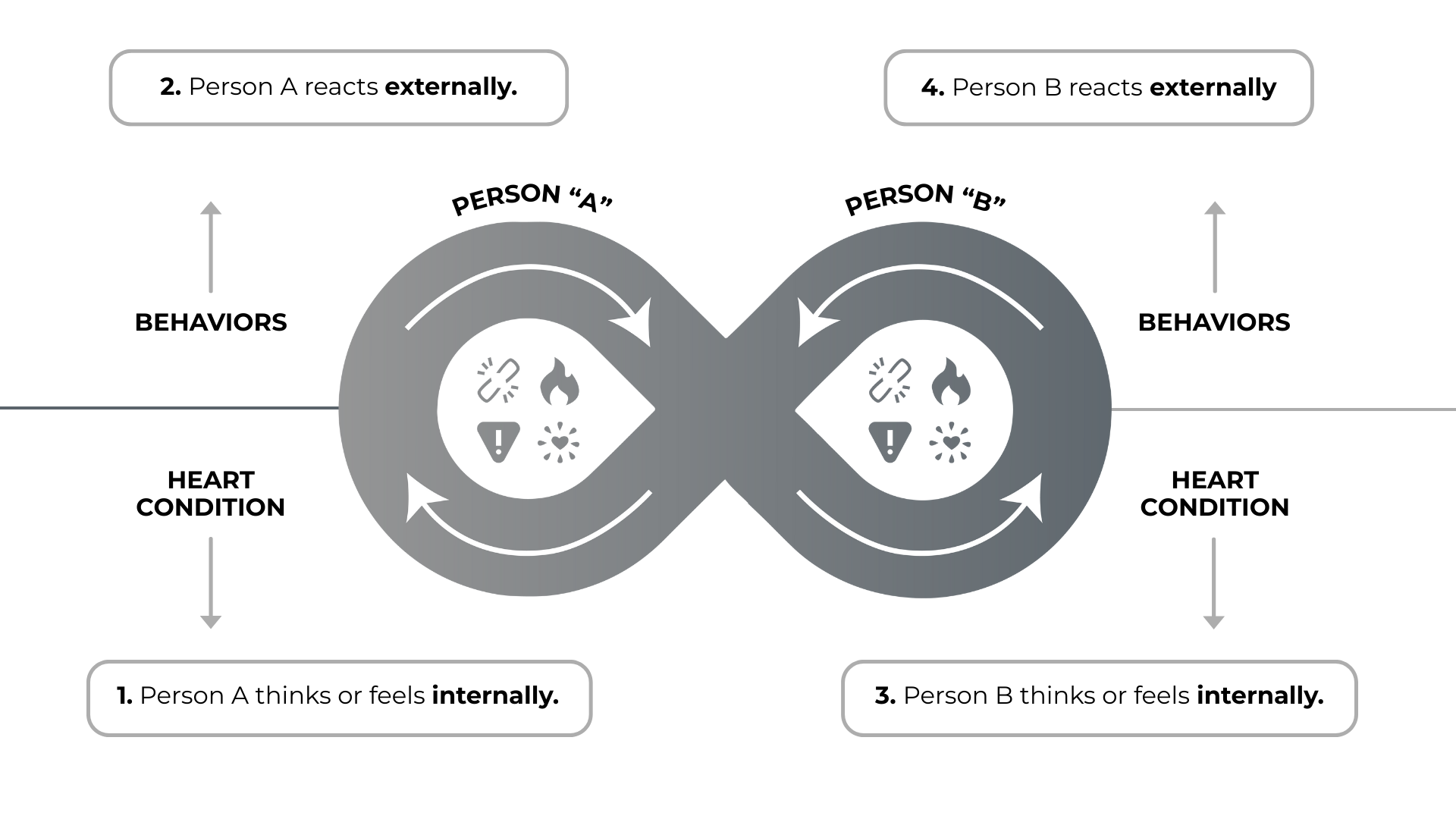
Understanding "The Dance" in Any Relationship
The Dance Diagram (an infinity loop) helps you visualize what’s really happening beneath the surface in any relationship—whether with a spouse, friend, co-worker, or family member.
It shows how each person’s reactions are shaped by their Core Motivations—their Core Fear, Desire, Weakness, and Longing.
We all see life through our unique lens, interpreting and reacting based on how aligned (healthy) or misaligned (unhealthy) we are in the moment.
In the diagram:
- Each loop represents one person in the relationship.
- Inside each person’s loop is their Core Motivations (Core Fear, Desire, Weakness, and Longing).
- Below the line is what’s happening internally—your thoughts, emotions, and Core Motivations (unseen by the other person).
- Above the line is what’s happening externally—your words, tone, and behavior (what the other person does see).
When we don’t consider the hidden motivations below the surface, we often misjudge behaviors and miss what’s really going on. That’s when disconnection happens.
Here’s how The Dance flows:
- Person A thinks or feels internally
- Person A reacts externally
- Person B thinks or feels internally
- Person B reacts externally
🌀 And the cycle continues—until someone becomes aware, pauses, and chooses a healthier response. That’s where real connection begins.
Understanding this cycle provides a practical way to identify what’s truly happening in moments of tension, and to respond with empathy, clarity, and compassion instead of reactivity or assumptions. This is how you begin to create meaningful change in every relationship.
Here is an example of a misaligned dance for Type 2 and Type 2:
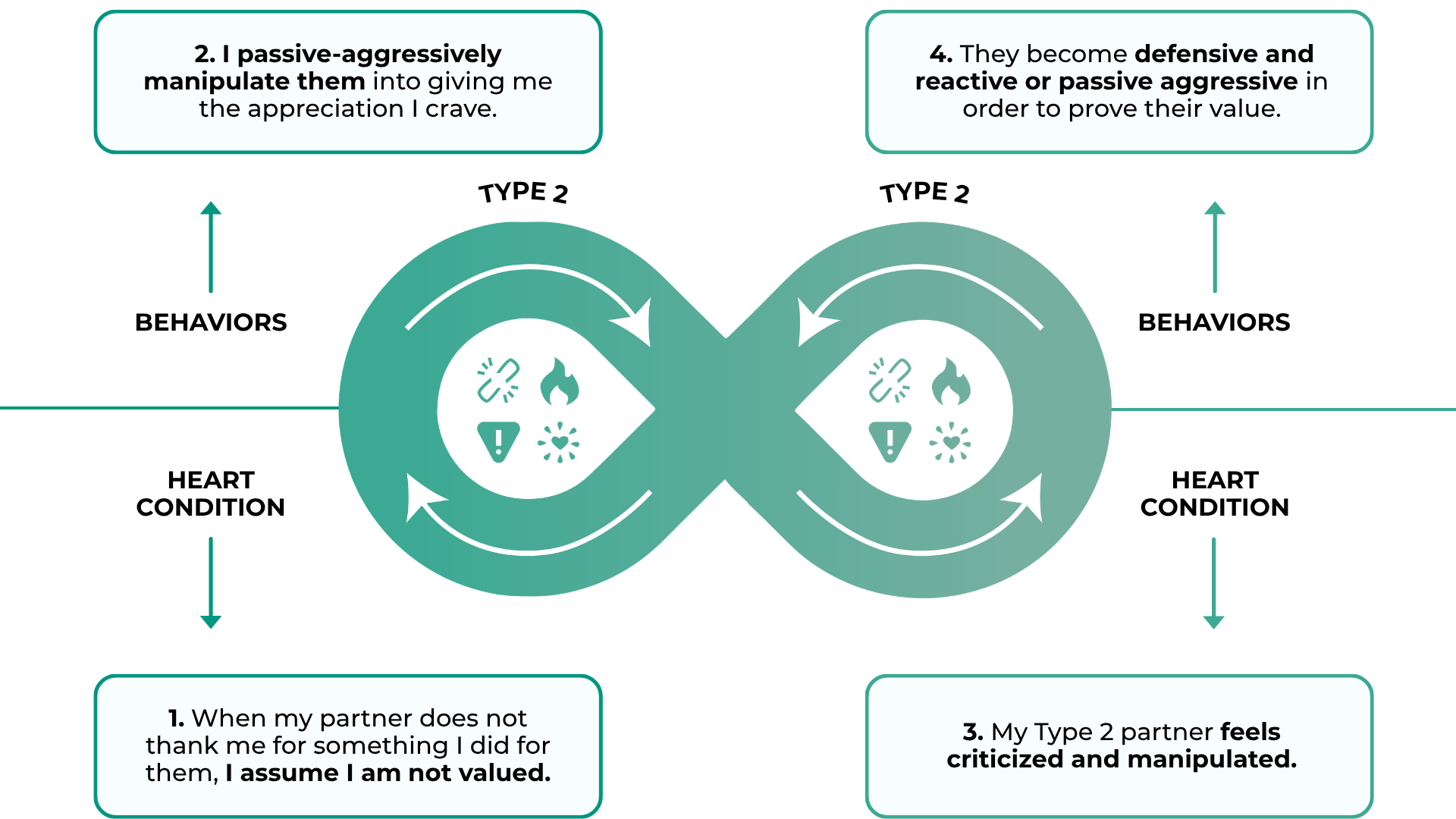
When we’re misaligned, we often engage in a relational dance driven by fear, unmet desires, and unconscious attempts to get our core needs met—usually by expecting our partner to do what only inner growth can provide. This can lead to frustration, disconnection, or even resentment.
But when we become more aligned with who we are and grow in self-awareness, the dynamic shifts. Here is an example of an aligned dance for Type 2 and Type 2:
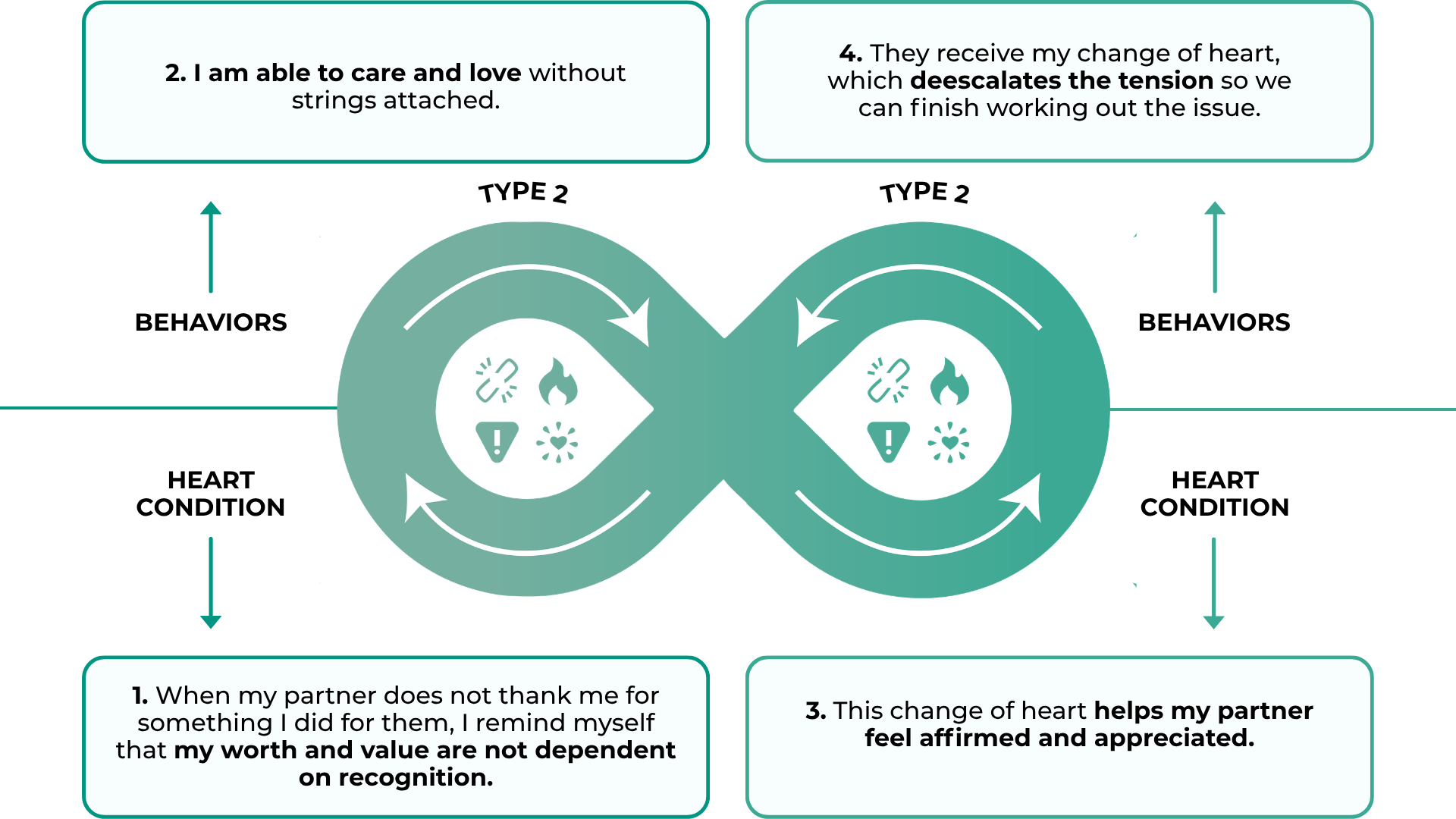
When we are aligned, we begin to recognize our Core Motivations in real time and stop placing the full weight of them on our partner. Instead, we show up with curiosity, grace, and a deeper understanding of what we (and our partner) truly need, creating space for a more balanced, supportive, and connected relationship.
Want to learn more about the dance and how it can help your relationship thrive? Explore our type-specific couple courses, designed to help you grow together with more clarity and connection. Click the link at the bottom of the page to get started!
The Strengths of a Type 2 + Type 2 Relationship 💪
- Unmatched Support: Both partners are naturally attentive and generous, always ready to uplift and encourage each other.
- Emotional Intimacy: Their deep empathy creates a safe space for vulnerability and heartfelt sharing.
- Shared Values of Service: Whether with family, friends, or community, they prioritize love expressed through action.
- Mutual Encouragement: They inspire one another, making the relationship warm and supportive.
This strong foundation of care enables them to build a deeply loving and supportive partnership that feels like home.
The Challenges of a Type 2 + Type 2 Relationship 💔
- Neglecting Self-Care: Both may put each other’s needs before their own, leading to exhaustion or resentment.
- Unspoken Expectations: They may expect the other to “just know” what they need without asking directly, which can lead to miscommunication.
- Difficulty Setting Boundaries: Saying “no” can feel impossible, which may lead to overwhelm and emotional burnout.
- Seeking External Validation: Each partner’s desire to be needed can sometimes cause codependency or feelings of insecurity.
Without attention to these patterns, their loving intentions may unintentionally create distance or tension.
How Their Core Struggle Affects the Relationship ⚠️
Type 2's natural generosity is a gift, but when it becomes excessive, it can strain the relationship. When both partners are constantly giving without receiving, they may experience:
- Emotional depletion and frustration from unmet needs.
- Subtle resentment because they feel taken for granted.
- Believing that they know what is best for their partner.
- Difficulty expressing true feelings or asking for help.
Type 2's often see themselves as self-sacrificial helpers, which can make it hard for them to recognize when their giving comes with strings attached or when their actions are subtly manipulative, trying to earn love or appreciation in return. This unconscious manipulation can create confusion and tension, as both partners may struggle to admit their own needs or boundaries.
This cycle can erode their connection unless they consciously practice balance, honest communication, and mutual care.
Breaking the Cycle ♾️: Balancing Giving with Receiving
The good news? A Type 2 + Type 2 relationship can flourish when both partners learn to care for themselves as much as they care for each other. Here’s how:
- Practice honest communication about needs and limits rather than assuming the other person knows.
- Make self-care a shared priority to prevent burnout and deepen emotional resilience.
- Encourage mutual receiving — allow space for both parties to be supported.
- Set clear boundaries around time and energy to maintain a healthy balance.
- Recognize and gently address tendencies toward manipulation, recognizing that a desire to be seen as self-sacrificial can mask subtle attempts to control or gain approval.
- Celebrate vulnerability as a strength, not a weakness; ask for help when you need it.
By embracing these shifts, two Type 2's can build a relationship that’s nurturing, sustainable, and deeply fulfilling.
The Role of Communication in Building a Stronger Bond 💬
Since Type 2's are naturally focused on caring for others, communication can easily become clouded by unspoken expectations or emotional undercurrents. To build a healthier connection:
- Speak from your own experience: Use “I feel…” statements instead of hinting or assuming your partner should know what you need.
- Check assumptions: Just because you would offer help in a certain way doesn’t mean your partner wants or expects the same.
- Gently name boundaries: Say, “I’m feeling overwhelmed and need a little space,” rather than letting resentment build.
- Take turns giving and receiving: Create shared rhythms of support so neither partner ends up doing all the emotional labor.
By learning to communicate clearly and with mutual respect, Type 2 couples can create a safe space where both people feel seen, valued, and cared for.
How Growth and Self-Awareness Strengthen the Relationship 🌱
This pairing thrives when both partners:
- Reflect on their motivations to ensure they are giving from a place of abundance, not obligation or manipulation.
- Develop emotional independence alongside connection.
- Seek support outside the relationship if needed, through coaching, therapy, or trusted friends.
Celebrate their shared gifts of empathy and kindness while honoring their individuality.
Final Thoughts: Nurturing Love with Boundaries and Honesty 💗
At their best, two Type 2's can create a deeply caring and connected partnership filled with warmth, generosity, and mutual growth. But to truly thrive, they must remember that love includes caring for themselves just as much as for each other. Without self-awareness, their desire to give can become entangled with unspoken expectations or subtle manipulation, leading them to offer care in hopes of receiving appreciation or affirmation in return. When they learn to give freely, ask directly, and receive without guilt, their relationship becomes a powerful source of healing and joy — a true partnership of heart and soul.
What’s next:
If you’re ready to grow closer and finally understand the unique dynamics of your relationship, the Becoming Us course is your next best step. This personalized experience is tailored to your exact Enneagram Type pairing, walking you through eight transformational modules and a beautifully designed 64-page guidebook that reveals how your personalities dance together, both when you're aligned and when you're misaligned.
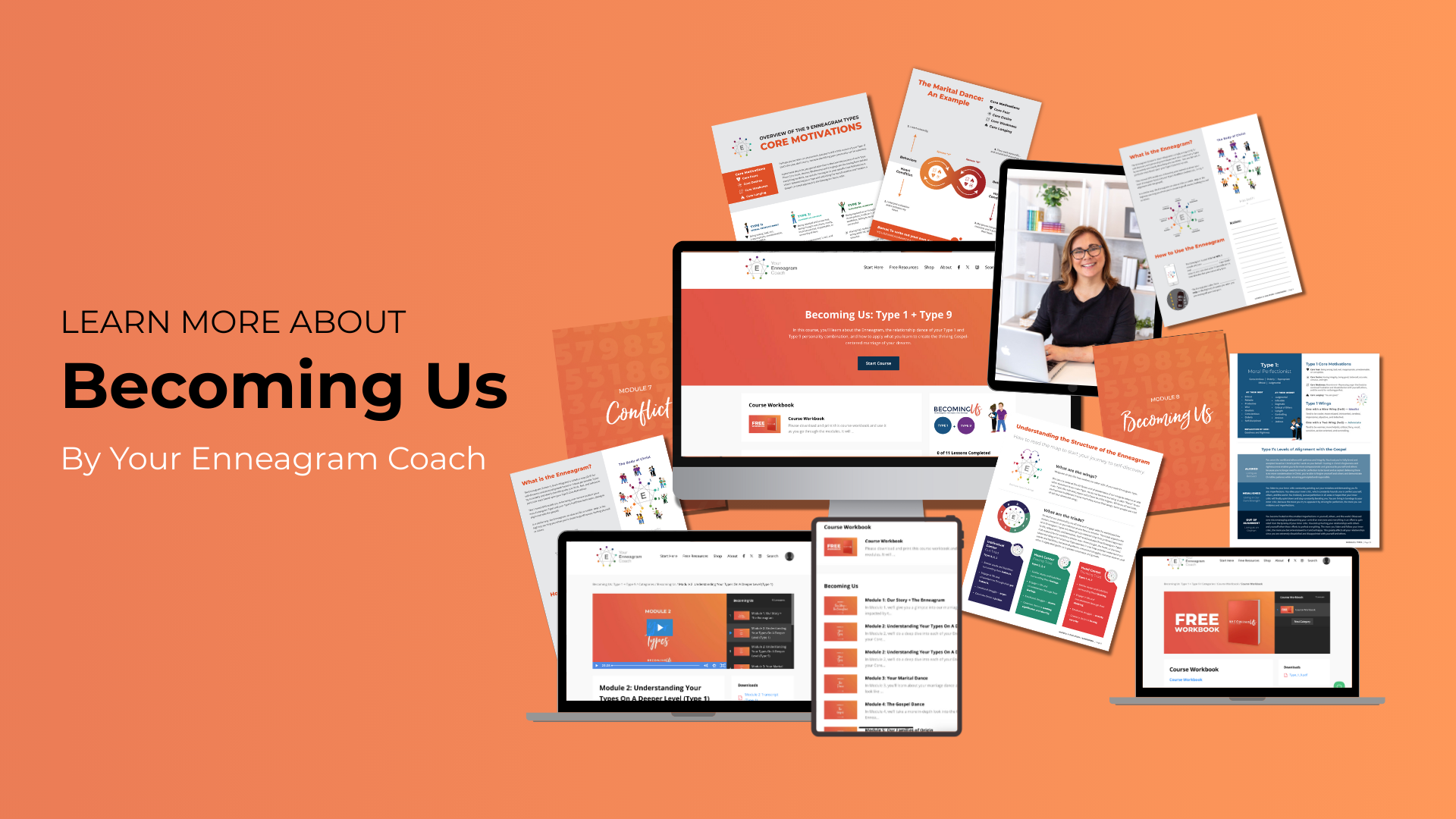
You'll discover the deeper reasons behind your patterns, gain language to navigate conflict with compassion, and find the clarity and direction you’ve been craving. Couples say they finally feel seen, understood, and equipped—and we know you will too. Your relationship is worth investing in. Take advantage of the special sale and start your Becoming Us journey today. Click here to learn more. 💛
Other Great Next Steps:
|
Get astonishing clarity with your couple-type Becoming Us course |
We would love to share some free Enneagram resources with you.