
Type 2 + Type 6 Compatibility 💚🧡: A Bond Built on Loyalty and Heart
Feb 09, 2026
A relationship between an Enneagram Type 2 and Type 6 is built on deep loyalty and caring support. Type 2’s natural warmth and generosity blend with Type 6’s devotion and desire for security, creating a partnership grounded in trust and mutual care. While Type 2 brings heartfelt nurturing and emotional connection, Type 6 offers steadfast loyalty and a protective nature. Together, they build a bond focused on safety, encouragement, and emotional reassurance. However, when Type 2 feels taken for granted or overextended, and Type 6 wrestles with anxiety or doubt, tension can arise. The key to a thriving Type 2 + Type 6 relationship is for Type 2 to set healthy boundaries and practice self-care, while Type 6 learns to manage anxiety without becoming overly dependent—so both partners feel respected and balanced.
But how compatible are Type 2's and Type 6's in a romantic relationship? Their distinct ways of showing love and managing anxiety can lead to misunderstandings if they don’t communicate openly. Let’s explore what helps this duo thrive—and what challenges they might face.
Understanding the Type 2 and Type 6 Personality in Relationships 💑🏻
Type 2's, also known as the Nurturing Supporter or Helper, are warm, generous, and focused on relationships. Their core desire is to be loved and needed, while their core fear is being unwanted or unworthy of love. They often show care by anticipating and meeting others’ needs, sometimes at the expense of their own. In relationships, this can lead to giving in order to feel valued or indispensable.
Type 6's, also known as the Faithful Guardian or Loyalist, bring caution and a deep longing for safety and guidance into their relationships. Their core desire is to feel secure and supported, while their core fear is being without support or guidance. They often anticipate worst-case scenarios, mentally preparing to protect themselves and loved ones from harm. This vigilance makes them dependable partners, but can also lead to anxiety and doubt as they seek reassurance.
The Core Motivations of Type 2 and Type 6:
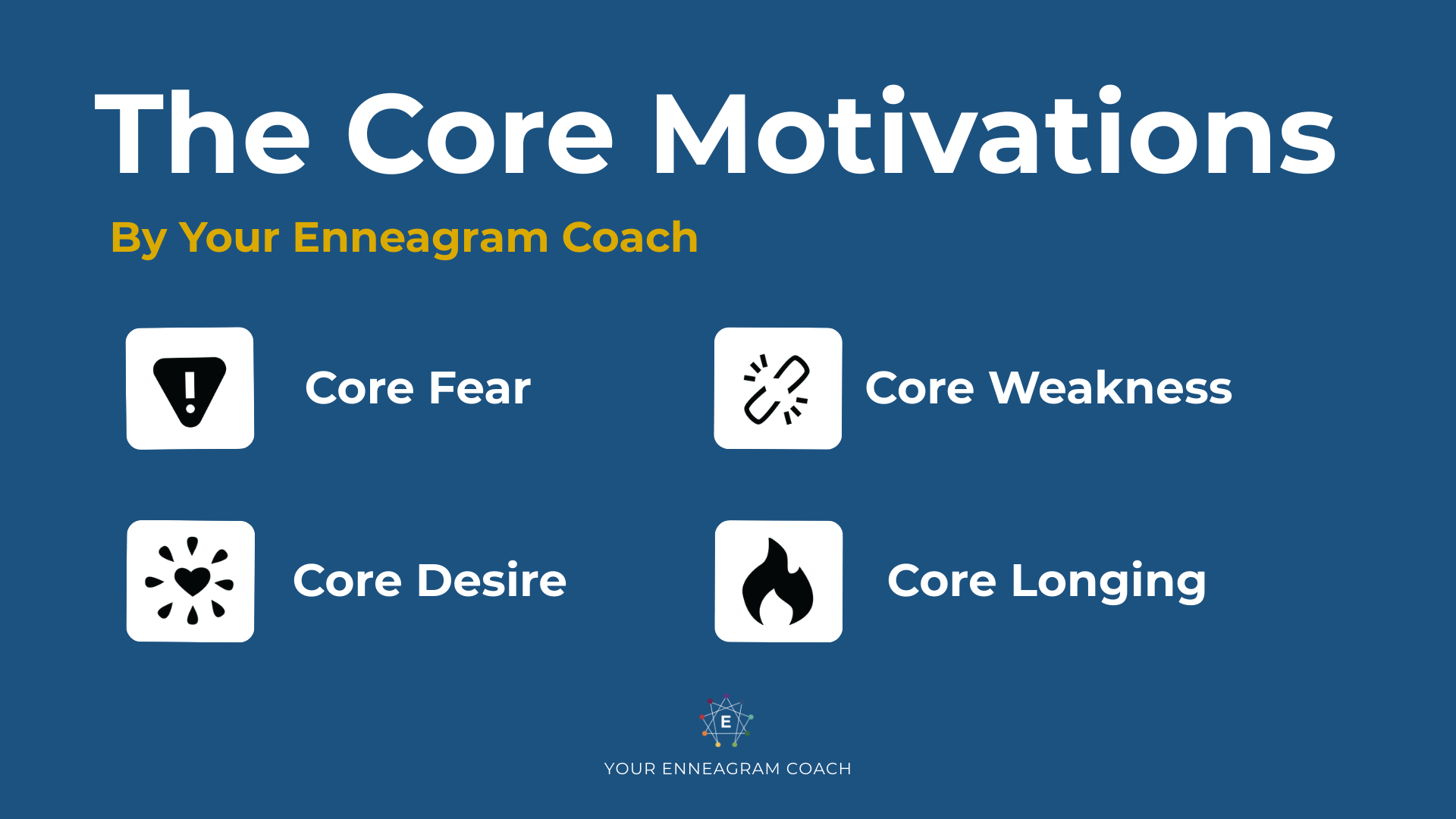
The four Core Motivations are the driving forces behind why each type thinks, feels, and behaves in particular ways.
At Your Enneagram Coach, we always start with the Core Motivations because they are the why behind everything we do. Whether it's how we communicate, handle conflict, or express love, our Core Fear, Desire, Weakness, and Longing shape our relational patterns. When we understand what’s really driving our own behavior—and our partner’s—we can move from frustration to empathy, and from disconnection to deeper connection.
Here are the icons that YEC uses to represent the Core Motivations throughout their work.
Type 2
- Core Fear: Being rejected and unwanted, being thought worthless, needy, inconsequential, dispensable, or unworthy of love.
- Core Desire: Being appreciated, loved, and wanted.
- Core Weakness: Pride—Denying your own needs and emotions while using your strong intuition to discover and focus on the emotions and needs of others, confidently inserting your helpful support in hopes that others will say how grateful they are for your thoughtful care.
- Core Longing: “You are wanted and loved.”
Type 6
- Core Fear: Feeling fear itself, being without support, security, or guidance; being blamed, targeted, alone, or physically abandoned.
- Core Desire: Having security, guidance, and support.
- Core Weakness: Anxiety—Scanning the horizon of life and trying to predict and prevent negative outcomes (especially worst-case scenarios); remaining in a constant state of apprehension and worry.
- Core Longing: “You are safe and secure.”
The Dance 💃🏽🕺🏼
We created the Dance to show the relational dynamics between two Enneagram types.
The Dance can give you great insight into why you and your partner keep running into the same conflicts over and over again, and help you break free from the unhealthy communication cycles you often repeat.
Understanding "The Dance" in Any Relationship
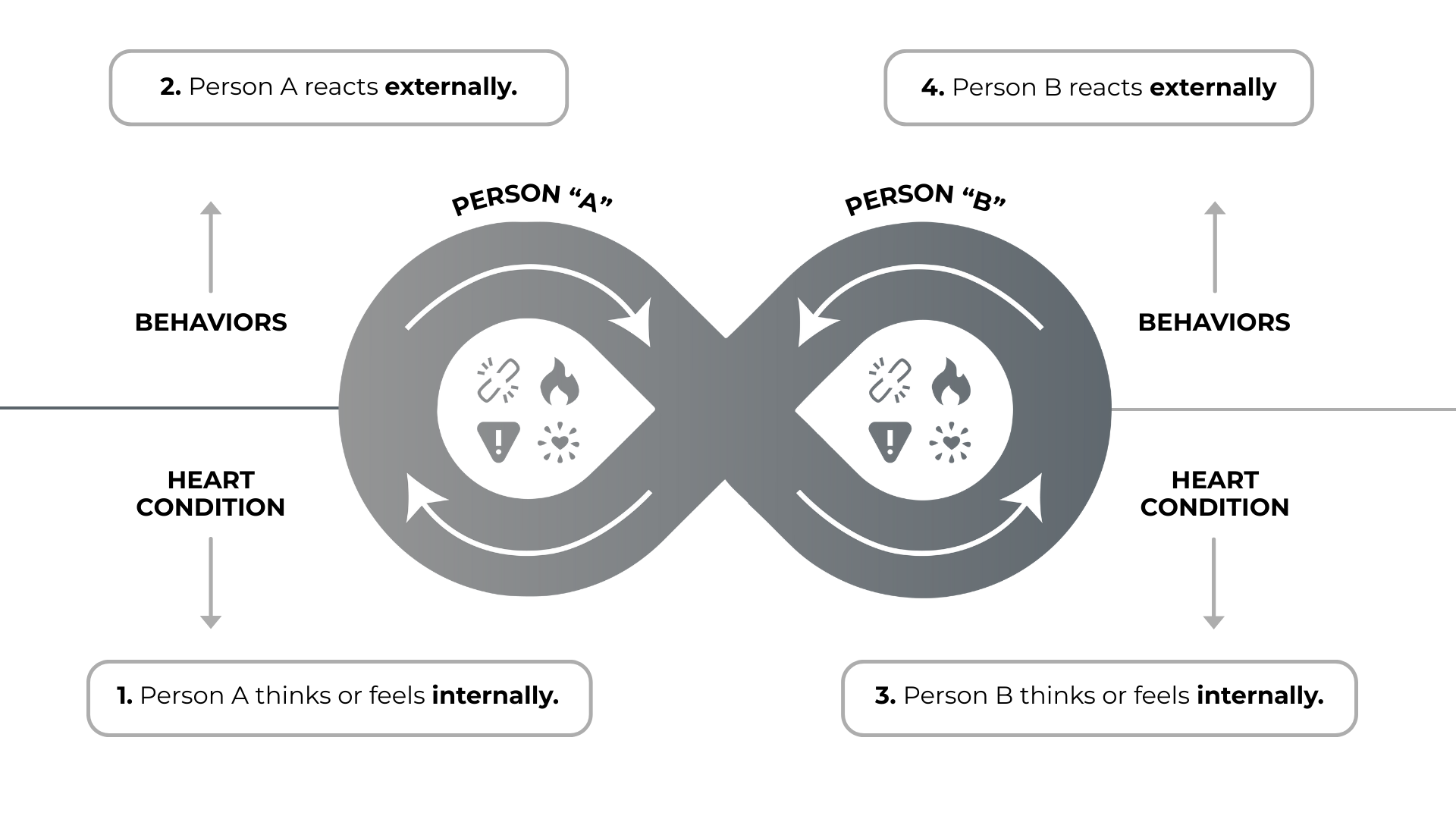
The Dance Diagram (an infinity loop) helps you visualize what’s really happening beneath the surface in any relationship—whether with a spouse, friend, co-worker, or family member.
It shows how each person’s reactions are shaped by their Core Motivations—their Core Fear, Desire, Weakness, and Longing.
We all see life through our unique lens, interpreting and reacting based on how aligned (healthy) or misaligned (unhealthy) we are in the moment.
In the diagram:
- Each loop represents one person in the relationship.
- Inside each person’s loop is their Core Motivations (Core Fear, Desire, Weakness, and Longing).
- Below the line is what’s happening internally—your thoughts, emotions, and Core Motivations (unseen by the other person).
- Above the line is what’s happening externally—your words, tone, and behavior (what the other person does see).
When we don’t consider the hidden motivations below the surface, we often misjudge behaviors and miss what’s really going on. That’s when disconnection happens.
Here’s how The Dance flows:
- Person A thinks or feels internally
- Person A reacts externally
- Person B thinks or feels internally
- Person B reacts externally
🌀 And the cycle continues—until someone becomes aware, pauses, and chooses a healthier response. That’s where real connection begins.
Understanding this cycle provides a practical way to identify what’s truly happening in moments of tension, and to respond with empathy, clarity, and compassion instead of reactivity or assumptions. This is how you begin to create meaningful change in every relationship.
Here is an example of a misaligned dance for Type 2 and Type 6:
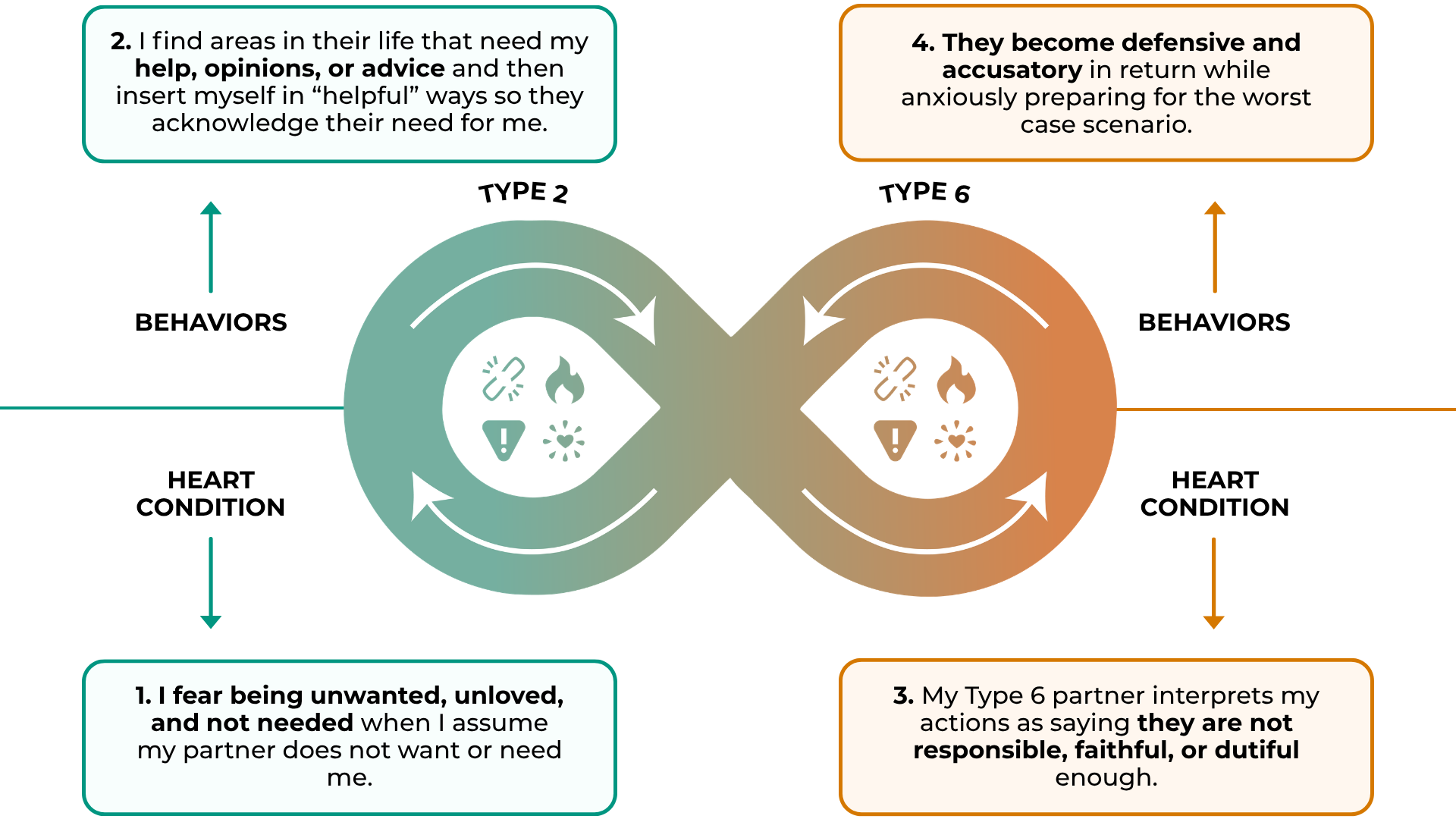
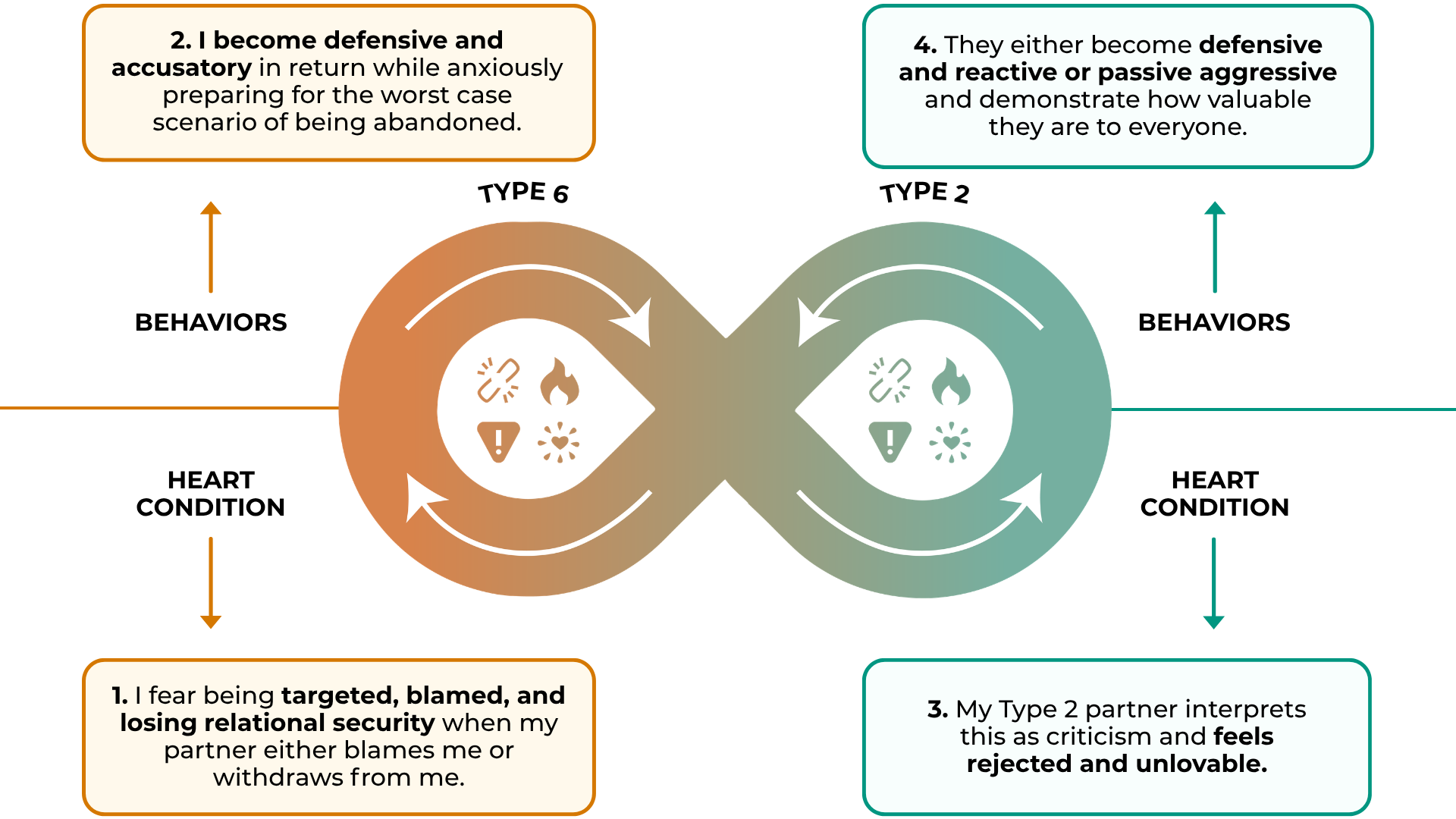
When we’re misaligned, we often engage in a relational dance driven by fear, unmet desires, and unconscious attempts to get our core needs met—usually by expecting our partner to do what only inner growth can provide. This can lead to frustration, disconnection, or even resentment.
But when we become more aligned with who we are and grow in self-awareness, the dynamic shifts. Here is an example of an aligned dance for Type 2 and Type 6:
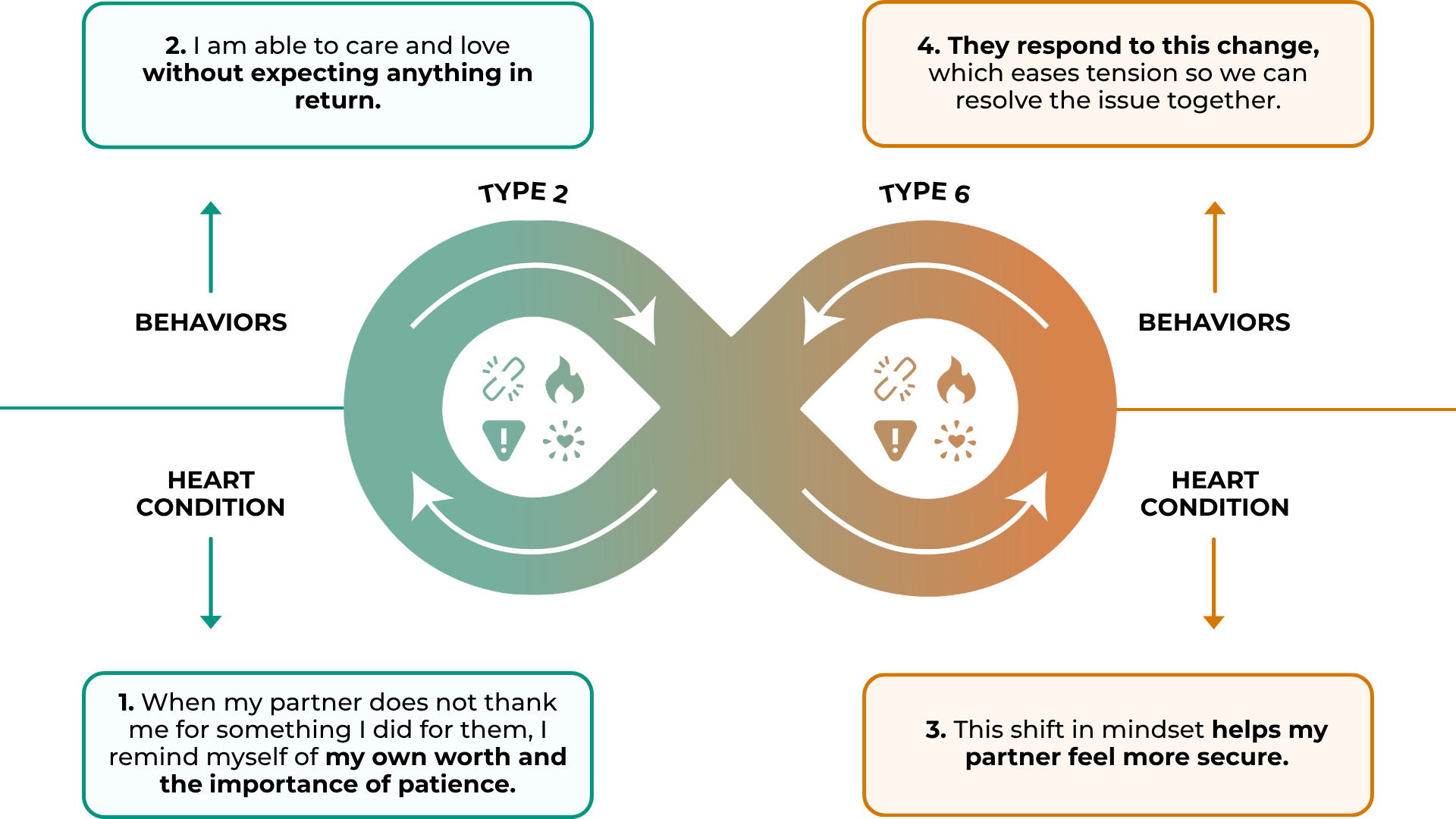
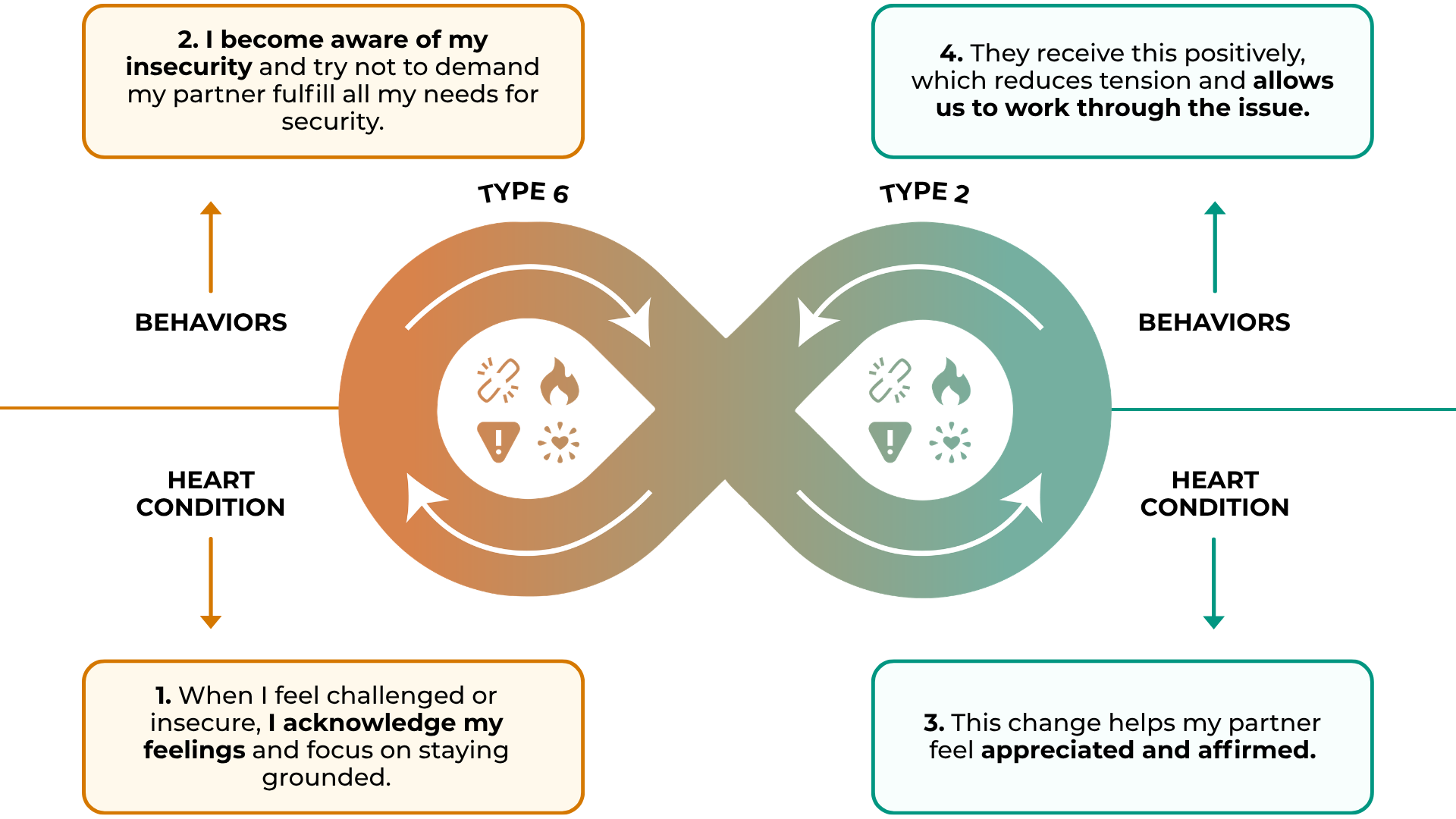
When we are aligned, we begin to recognize our Core Motivations in real time and stop placing the full weight of them on our partner. Instead, we show up with curiosity, grace, and a deeper understanding of what we (and our partner) truly need, creating space for a more balanced, supportive, and connected relationship.
Want to learn more about the dance and how it can help your relationship thrive? Explore our type-specific couple courses—designed to help you grow together with more clarity and connection. Click the link at the bottom of the page to get started!
The Strengths of a Type 2 + Type 6 Relationship 💪
- Complementary Support: Type 2's bring heartfelt warmth and nurturing, while Type 6's offer loyalty and steady reassurance, creating a strong foundation.
- Mutual Encouragement: Type 2's encourage Type 6 to feel more confident and open, while Type 6 helps Type 2 develop healthy boundaries and balance.
- Shared Commitment: Both prioritize loyalty and connection, deeply valuing trust and dependability in their relationship.
- Protective Care: Type 6’s vigilance helps keep the relationship secure, while Type 2’s generosity fosters emotional closeness.
Together, they create a resilient and loving partnership where trust grows and support flows naturally, even through challenges.
The Challenges of a Type 2 + Type 6 Relationship 💔
- Worry vs. Optimism: Type 6’s natural skepticism and anxiety can clash with Type 2’s hopeful and giving nature, creating tension.
- Feeling Unappreciated: Type 2 may feel hurt if their efforts to care go unnoticed or taken for granted.
- Need for Reassurance vs. Overextension: Type 6’s frequent need for reassurance can overwhelm Type 2’s tendency to over-give and exhaust themselves.
- Different Expressions of Loyalty: Because Type 2’s loyalty is more about emotional giving and Type 6’s is more about vigilance and security, they can sometimes misunderstand each other’s intentions.
Without clear communication and boundaries, both can slip into codependent patterns that strain the relationship.
How Their Core Struggles Affect the Relationship ⚠️
When the 2’s need to be needed collides with the 6’s drive for security, both partners can end up feeling unsteady or unappreciated:
- Type 2's may overextend themselves, offering help and reassurance with the hidden hope of being valued in return.
- Type 6's may become suspicious or anxious, questioning the 2’s motives or worrying about whether the relationship is truly stable.
- Both may react defensively, with the 2 doubling down on giving and the 6 escalating with doubts or fears.
This unconscious pattern—helping to secure love (2) and testing for loyalty (6)—can leave both partners feeling drained, misunderstood, and emotionally tense.
Breaking the Cycle ♾️: Moving Beyond Codependency and Worry
For Type 2's and Type 6's to thrive together, they need to break free from cycles of doubt and overgiving while learning to balance support with independence.
- Speak up about your needs: Clearly express what you need without expecting your partner to guess.
- Create space for vulnerability: Encourage sharing fears and feelings openly—without blame or judgment.
- Show appreciation often: Practice gratitude to acknowledge each other’s efforts and care.
- Balance closeness and independence: Find a healthy middle ground to avoid codependency while staying connected.
- Face challenges as a team: Approach problems together, supporting one another instead of handling issues alone.
The Role of Communication in Building a Stronger Bond 💬
For this pairing, communication thrives on steady reassurance and mutual respect for emotional pacing:
- Express appreciation regularly: 2's feel seen when their efforts are noticed, and 6's feel valued when their loyalty is acknowledged.
- Respect pacing and space: 6's may need time to process fears, and 2's need reassurance without being dismissed.
- Speak your fears, not just your needs: 6's can share what’s behind their doubt, and 2's can express what’s underneath their over-giving.
- Reassure without rescuing: Both 6's and 2's can offer support without trying to fix.
- Anchor your connection: Predictable check-ins or shared routines can ease anxiety and help both feel safe and supported.
How Growth and Self-Awareness Strengthen the Relationship 🌱
- Recognize the cycle of over-giving and over-reassuring. Type 2's may caretake to feel needed, while Type 6's may seek constant reassurance to feel safe. Noticing these patterns allows for a more balanced connection.
- Balance helpfulness with healthy independence. Type 2's grow by caring without overstepping, and Type 6's grow by learning to trust themselves and becoming dependent, building trust through mutual respect.
- Practice grounded presence. Instead of reacting to anxiety (6) or others’ needs (2), both can pause, check in with themselves, and respond with awareness rather than urgency.
- Value love in different forms. 2's may express love and care with big gestures, while 6's show up steadily over time. Noticing these rhythms helps each partner feel seen and valued.
Final Thoughts: A Partnership of Care and Courage 💗
At their best, a Type 2 and a Type 6 create a relationship grounded in loyalty, warmth, and mutual support. As they learn to trust one another, 2's offer heartfelt care without overreaching, and 6's bring steadfast commitment without becoming overly anxious. Through honest conversations, shared acts of support, and the safety of being fully known, they build a partnership that feels both secure and emotionally fulfilling.
What’s next:
If you’re ready to grow closer and finally understand the unique dynamics of your relationship, the Becoming Us course is your next best step. This personalized experience is tailored to your exact Enneagram Type pairing, walking you through eight transformational modules and a beautifully designed 64-page guidebook that reveals how your personalities dance together, both when you're aligned and when you're misaligned.
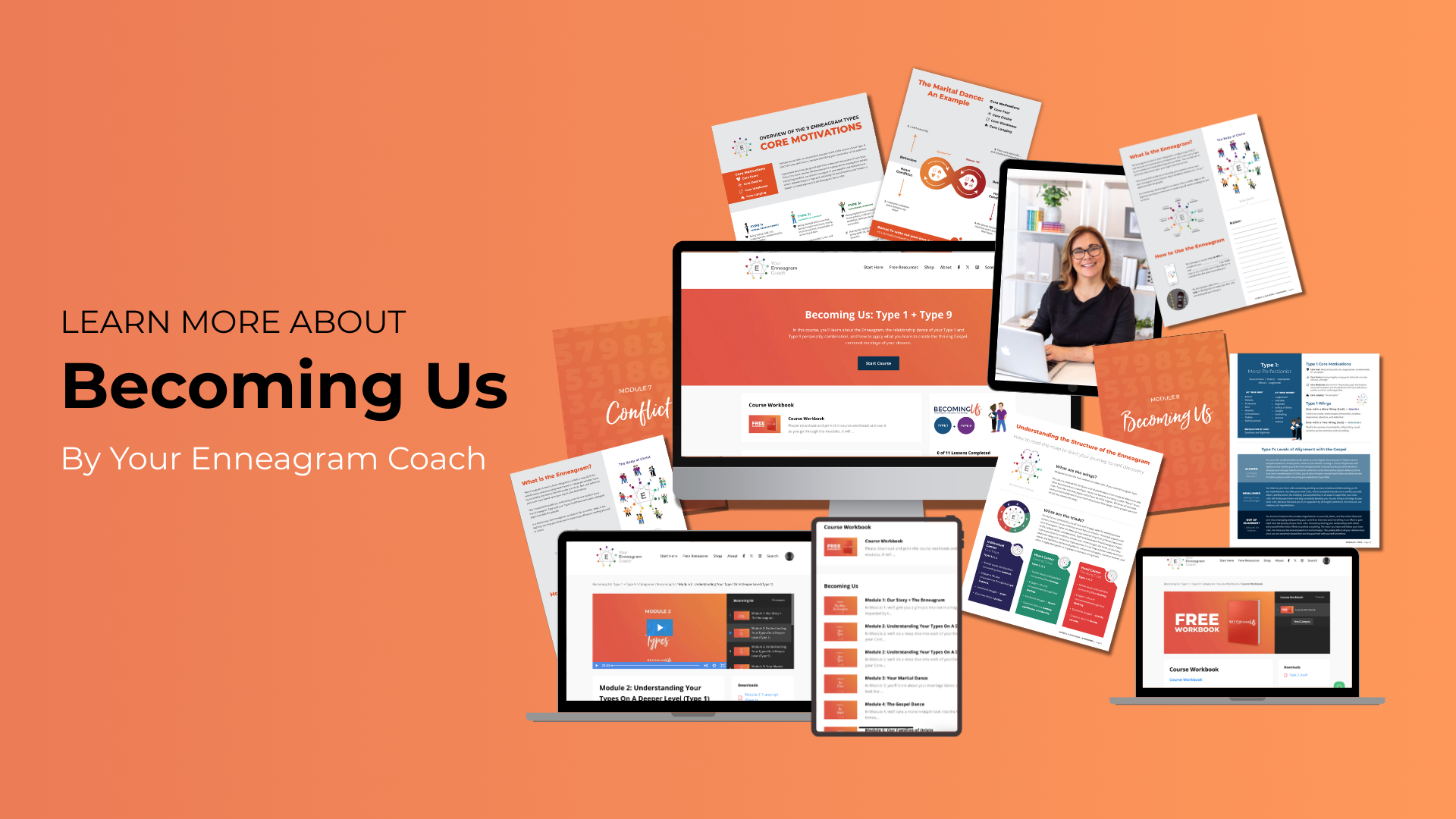
You'll discover the deeper reasons behind your patterns, gain language to navigate conflict with compassion, and find the clarity and direction you’ve been craving. Couples say they finally feel seen, understood, and equipped—and we know you will too. Your relationship is worth investing in. Take advantage of the special sale and start your Becoming Us journey today. Click here to learn more. 💛
Other Great Next Steps:
|
Get astonishing clarity with your couple-type Becoming Us course |
We would love to share some free Enneagram resources with you.