
Type 6 + Type 7 Compatibility 🧡❤️: Balancing Security and Adventure
Mar 06, 2026
A relationship between an Enneagram Type 6 and Type 7 combines loyalty and responsibility with energy and optimism. Type 6's bring commitment, steadiness, and a strong sense of responsibility, while Type 7's contribute spontaneity, enthusiasm, and a love of new experiences. Together, they create a dynamic in which life feels both secure and exciting: the Type 6 offers grounding and reliability, and the Type 7 encourages joy and exploration. However, their struggles with fear and avoidance can create tension. Type 6's may become anxious or overly cautious, while Type 7's may distract themselves with busyness, leaving the Type 6 feeling unsupported. The key to a thriving Type 6 + Type 7 relationship lies in balancing stability with freedom, honoring both the need for reassurance and the desire for adventure.
But how compatible are Type 6's and Type 7's in a romantic relationship? While their strengths can foster a vibrant and devoted partnership, their contrasting approaches to fear and uncertainty may lead to conflict. Let’s explore how this pairing can flourish, and where intentional growth may be needed.
Understanding the Type 6 and Type 7 Personality in Relationships 💑🏻
Type 6's, also known as the Faithful Guardian or Loyalist, bring caution and a deep longing for safety and guidance into their relationships. Their core desire is to feel secure and supported, while their core fear is being without support or guidance. They often anticipate worst-case scenarios, mentally preparing to protect themselves and loved ones from harm. This vigilance makes them dependable partners, but can also lead to anxiety and doubt as they seek reassurance.
Type 7's, also known as the Enthusiastic Optimist or Entertainer, bring energy, optimism, and spontaneity into their relationships. Their core desire is to feel satisfied and content, while their core fear is being trapped in pain or missing out on life’s possibilities. They often focus on the positive, seeking out joy and adventure with their partner. While this makes them exciting and uplifting, it can also lead to avoiding deeper emotions or commitments that feel too heavy.
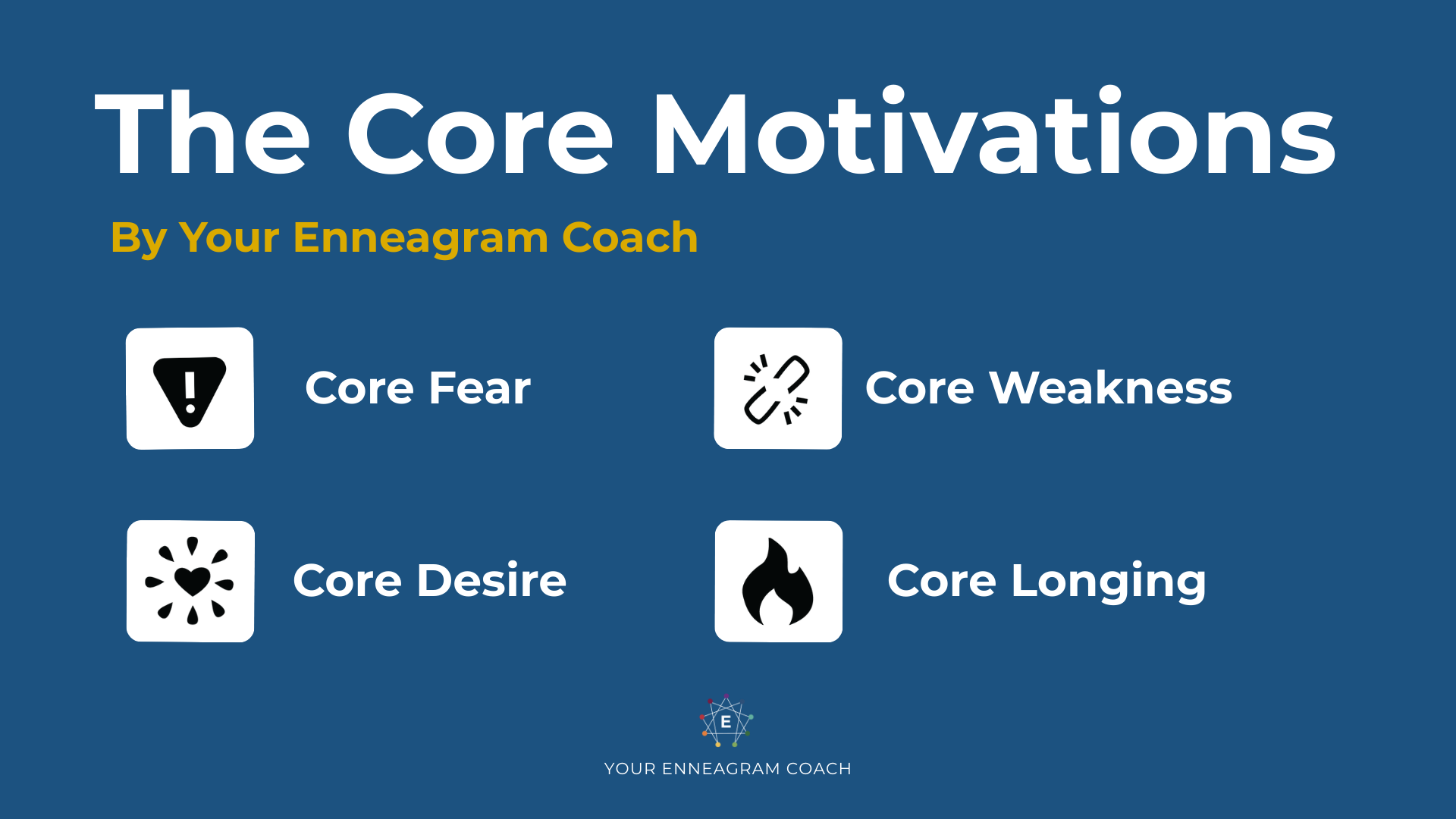
The Core Motivations of Type 6 and Type 7:
The four Core Motivations are the driving forces behind why each type thinks, feels, and behaves in particular ways.
At Your Enneagram Coach, we always start with the Core Motivations because they are the why behind everything we do. Whether it's how we communicate, handle conflict, or express love, our Core Fear, Desire, Weakness, and Longing shape our relational patterns. When we understand what’s really driving our own behavior—and our partner’s—we can move from frustration to empathy, and from disconnection to deeper connection.
qHere are the icons that YEC uses to represent the Core Motivations throughout their work.
Type 6
- Core Fear: Feeling fear itself, being without support, security, or guidance; being blamed, targeted, alone, or physically abandoned.
- Core Desire: Having security, guidance, and support.
- Core Weakness: Anxiety—Scanning the horizon of life and trying to predict and prevent negative outcomes (especially worst-case scenarios); remaining in a constant state of apprehension and worry.
- Core Longing: “You are safe and secure.”
Type 7
- Core Fear: Being deprived, trapped in emotional pain, limited, or bored; missing out on something fun.
- Core Desire: Being happy, fully satisfied, and content.
- Core Weakness: Gluttony—Feeling a great emptiness inside and having an insatiable desire to “fill yourself up” with experiences and stimulation in hopes of feeling completely satisfied and content.
- Core Longing: “You will be taken care of.”
The Dance 💃🏽🕺🏼
We created the Dance to show the relational dynamics between two Enneagram types.
The Dance can give you great insight into why you and your partner keep running into the same conflicts over and over again, and help you break free from the unhealthy communication cycles you often repeat.
Understanding "The Dance" in Any Relationship
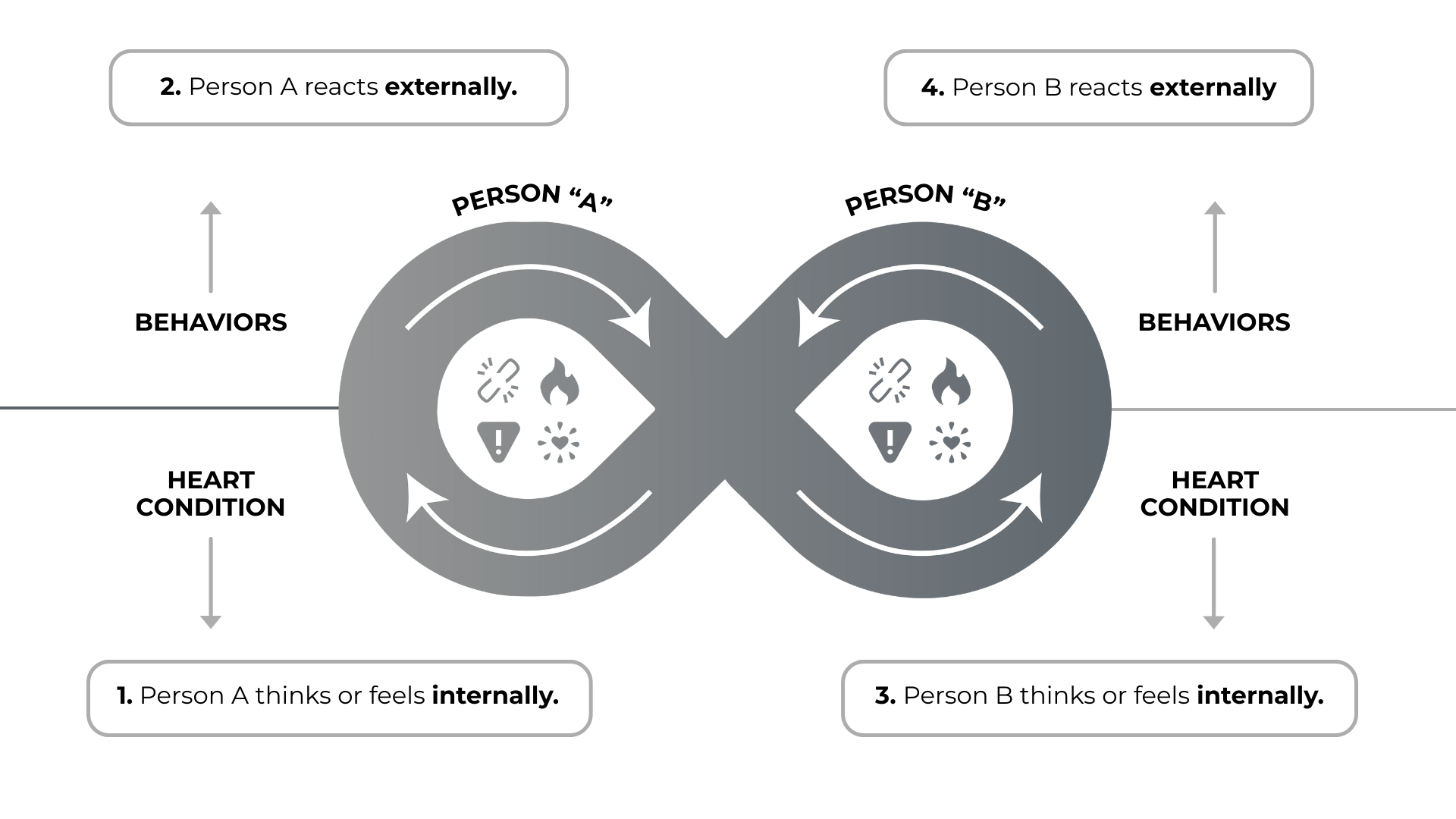
The Dance Diagram (an infinity loop) helps you visualize what’s really happening beneath the surface in any relationship—whether with a spouse, friend, co-worker, or family member.
It shows how each person’s reactions are shaped by their Core Motivations—their Core Fear, Desire, Weakness, and Longing.
We all see life through our unique lens, interpreting and reacting based on how aligned (healthy) or misaligned (unhealthy) we are in the moment.
In the diagram:
- Each loop represents one person in the relationship.
- Inside each person’s loop is their Core Motivations (Core Fear, Desire, Weakness, and Longing).
- Below the line is what’s happening internally—your thoughts, emotions, and Core Motivations (unseen by the other person).
- Above the line is what’s happening externally—your words, tone, and behavior (what the other person does see).
When we don’t consider the hidden motivations below the surface, we often misjudge behaviors and miss what’s really going on. That’s when disconnection happens.
Here’s how The Dance flows:
- Person A thinks or feels internally
- Person A reacts externally
- Person B thinks or feels internally
- Person B reacts externally
🌀 And the cycle continues—until someone becomes aware, pauses, and chooses a healthier response. That’s where real connection begins.
Understanding this cycle provides a practical way to identify what’s truly happening in moments of tension, and to respond with empathy, clarity, and compassion instead of reactivity or assumptions. This is how you begin to create meaningful change in every relationship.
Here is an example of a misaligned dance for Type 6 and Type 7:
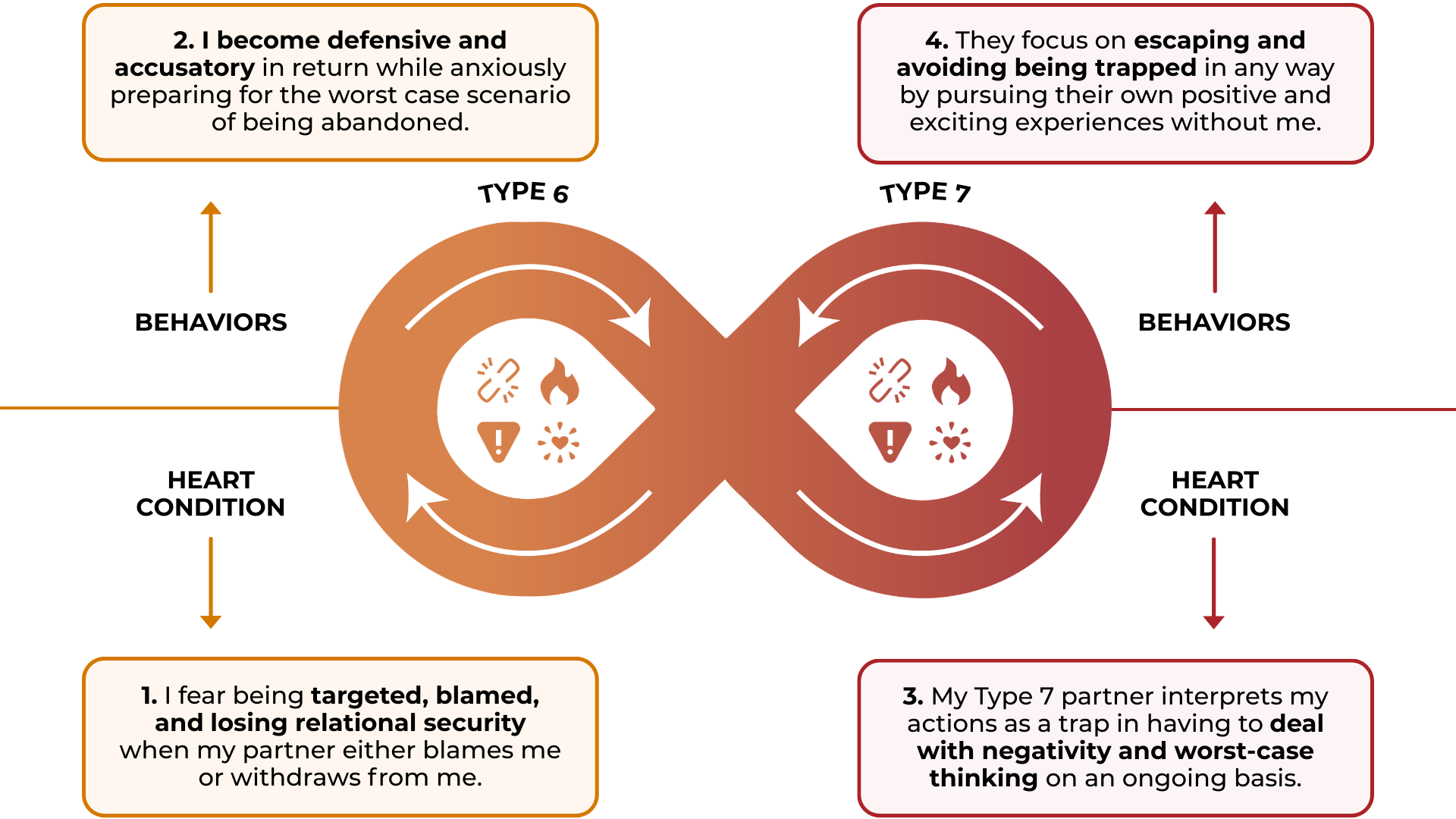
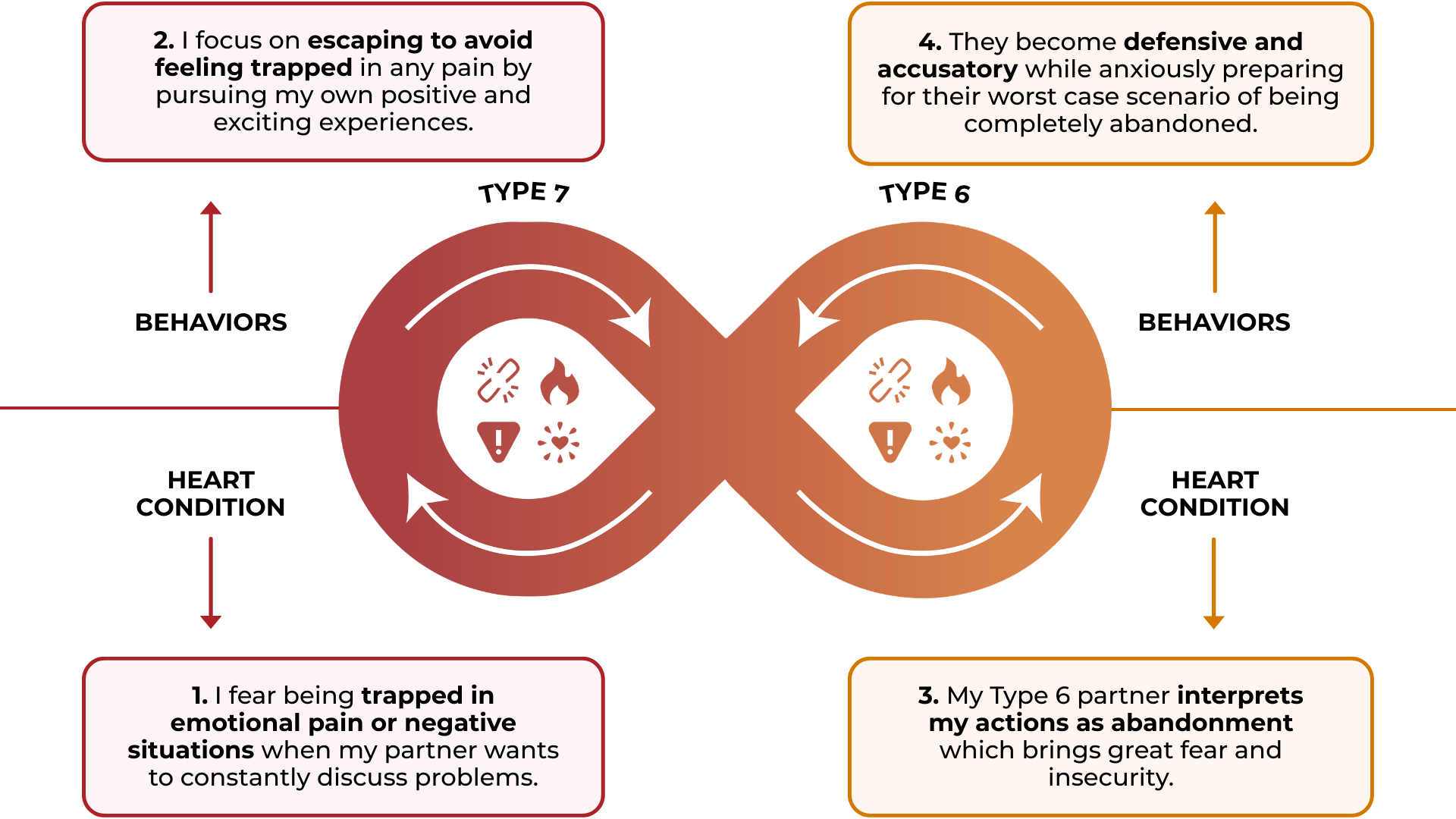
When we’re misaligned, we often engage in a relational dance driven by fear, unmet desires, and unconscious attempts to get our core needs met—usually by expecting our partner to do what only inner growth can provide. This can lead to frustration, disconnection, or even resentment.
But when we become more aligned with who we are and grow in self-awareness, the dynamic shifts. Here is an example of an aligned dance for Type 6 and Type 7:
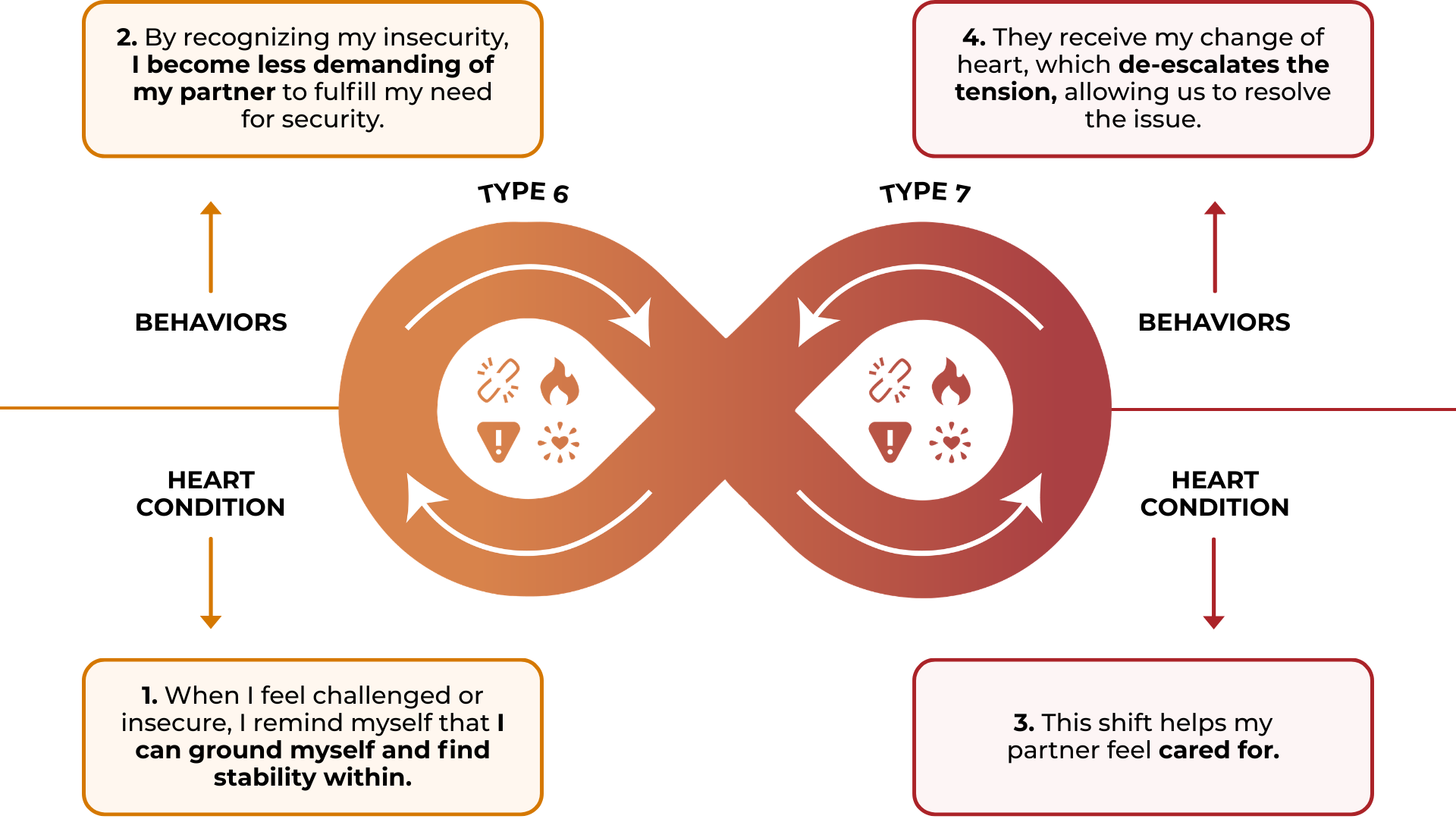
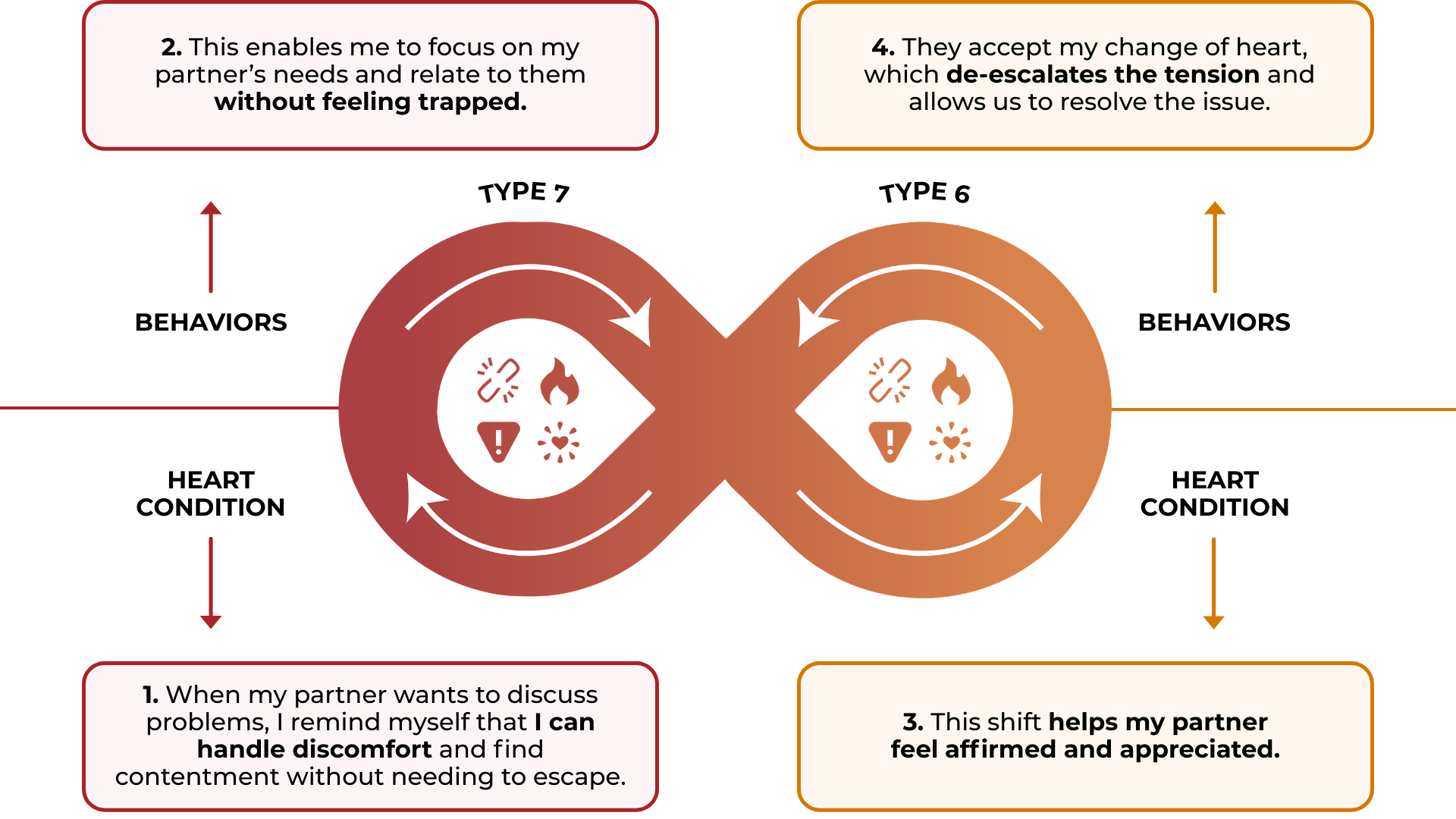
When we are aligned, we begin to recognize our Core Motivations in real time and stop placing the full weight of them on our partner. Instead, we show up with curiosity, grace, and a deeper understanding of what we (and our partner) truly need, creating space for a more balanced, supportive, and connected relationship.
Want to learn more about the dance and how it can help your relationship thrive? Explore our type-specific couple courses—designed to help you grow together with more clarity and connection. Click the link at the bottom of the page to get started!
The Strengths of a Type 6 + Type 7 Relationship 💪
- A Balance of Security and Adventure: Type 6's offer loyalty, steadiness, and thoughtful caution, while Type 7's bring enthusiasm, optimism, and a love for adventure. Together, they create a relationship where safety meets excitement. Type 7's open doors to possibility, while Type 6's provide grounding and follow-through.
- Complementary Strengths: The Type 6’s ability to prepare and plan pairs beautifully with the Type 7’s ability to envision and inspire, giving the relationship both practicality and energy.
- Shared Desire for Connection: This couple thrives on being together. Type 6's crave closeness and reassurance, while Type 7's bring fun and lightheartedness, fostering strong companionship.
- Adventure Meets Dependability: Type 6's provide reliability and a strong sense of commitment, while Type 7's contribute variety and joy. Together, they build a partnership that feels secure yet vibrant.
When both are healthy, this relationship blends loyalty with liveliness, creating a bond that feels safe, playful, and full of possibility.
The Challenges of a Type 6 + Type 7 Relationship 💔
- Security vs. Freedom: Type 6's may want reassurance and predictability, while Type 7's may resist feeling tied down, creating tension around commitment and independence.
- Different Coping Styles: Type 6's may lean into worry or worst-case scenarios, while Type 7's try to avoid discomfort by focusing on pleasure and distraction, which can lead to misunderstandings.
- Conflict Approach: Type 6's may push for clarity and accountability, while Type 7's may deflect with humor or avoid tough topics, leaving 6's feeling unheard.
- Pace of Life: Type 6's may prefer caution and preparation, while Type 7's seek spontaneity and quick movement, which can sometimes cause frustration over prioritization.
Without awareness, this pairing can slip into a cycle of worry versus escape, where one presses for certainty and the other avoids it.
How Their Core Struggles Affect the Relationship ⚠️
When the Type 6’s need for security meets the Type 7’s need for freedom, their struggles can amplify:
- Type 6's may become anxious, questioning the stability of the relationship.
- Type 7's may feel pressured and pull away, avoiding responsibility.
- Both may talk past each other. Type 6's focus on potential problems, Type 7's insist everything is fine.
- This cycle can create a push-pull dynamic, where Type 6's cling tighter, and Type 7's push harder for space.
Over time, the relationship risks becoming unstable, with one overwhelmed by fear and the other distracted by escape.
Breaking the Cycle ♾️: Finding Balance Through Trust and Presence
To thrive together, Type 6's and Type 7's must practice grounding and trust-building. Here’s how:
- Build reassurance: Type 6's can trust their partner’s loyalty, while Type 7's can show reliability in small, consistent ways.
- Embrace honesty: Type 6's should express fears directly, while Type 7's should avoid brushing them off with distraction.
- Balance adventure and security: Plan activities that are exciting yet predictable enough for a Type 6 to feel safe.
- Slow down and stay present: Type 7's can resist running ahead, while Type 6's can relax into the moment instead of bracing for what’s next.
- Celebrate what they bring: The Type 6’s loyalty and the Type 7’s joy complement one another beautifully when valued.
The Role of Communication in Building a Stronger Bond 💬
For this couple, communication needs to bridge worry and optimism:
- Acknowledge fears and dreams: Both should validate each other’s outlook, one cautious, the other hopeful.
- Stay grounded in the present: Type 6's can avoid spiraling into “what-ifs,” while Type 7's can avoid fast-forwarding to the next plan.
- Invite balance: Create space for both lighthearted fun and serious talks.
- Be consistent: Type 7's showing up reliably helps ease Type 6's worries, while Type 6's giving space for joy helps Type 7's feel free.
With intentional communication, both can feel secure, uplifted, and connected.
How Growth and Self-Awareness Strengthen the Relationship 🌱
This pairing thrives when both partners can:
- Type 6's build trust: Learning to rely on themselves and their partner helps calm fears and create steadiness.
- Type 7's embrace responsibility: Following through and facing discomfort deepens intimacy and security.
- Together, they blend security and joy: Creating a life that is both adventurous and safe.
- Savor the moment: Instead of spiraling into worry or rushing ahead, they learn to celebrate what’s happening now.
Final Thoughts: A Partnership of Loyalty and Joy 💗
At their best, a Type 6 and a Type 7 create a relationship that feels secure, lively, and supportive. The Type 6 provides loyalty and grounded commitment, while the Type 7 brings enthusiasm and a zest for life. But to flourish, they must resist the cycle of fear and escape. By building trust, practicing presence, and striking a balance between caution and adventure, this couple can cultivate a bond that feels both deeply reassuring and joyfully alive.
What’s next:
If you’re ready to grow closer and finally understand the unique dynamics of your relationship, the Becoming Us course is your next best step. This personalized experience is tailored to your exact Enneagram Type pairing, walking you through eight transformational modules and a beautifully designed 64-page guidebook that reveals how your personalities dance together, both when you're aligned and when you're misaligned.
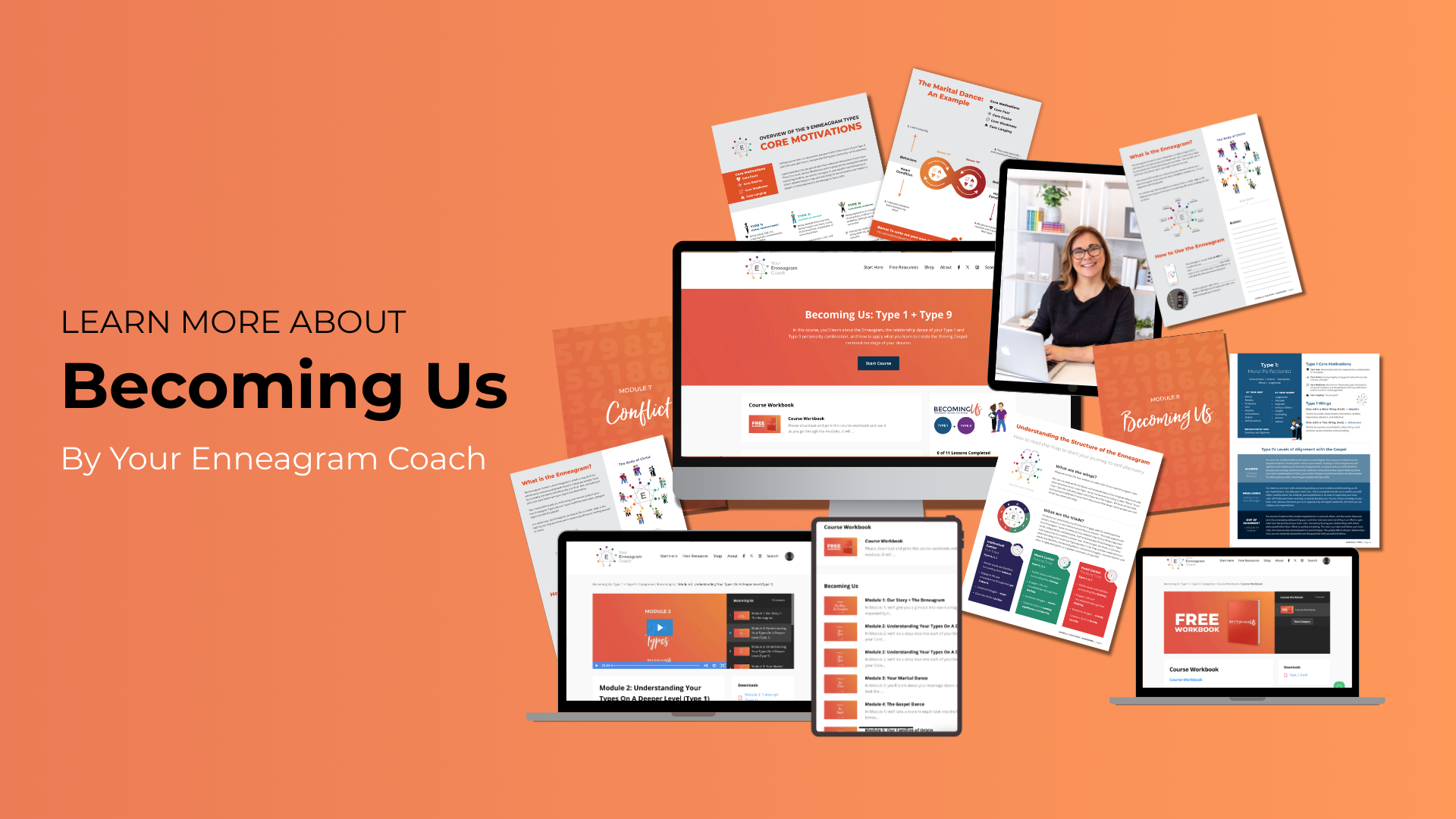
You'll discover the deeper reasons behind your patterns, gain language to navigate conflict with compassion, and find the clarity and direction you’ve been craving. Couples say they finally feel seen, understood, and equipped—and we know you will too. Your relationship is worth investing in. Take advantage of the special sale and start your Becoming Us journey today. Click here to learn more. 💛
Other Great Next Steps:
|
Get astonishing clarity with your couple-type Becoming Us course |
We would love to share some free Enneagram resources with you.