
Type 6 + Type 8 Compatibility 🧡♥️: Blending Loyalty and Strength
Mar 06, 2026
A relationship between an Enneagram Type 6 and Type 8 combines committed vigilance with bold assertiveness. Type 6's bring loyalty, thoughtfulness, and a strong sense of responsibility, while Type 8's contribute decisiveness, courage, and protective energy. Together, they create a dynamic where life feels both secure and empowered. The Type 8 offers direction and confidence, and the Type 6 offers caution and reliability. However, their struggles with control and fear can surface. Type 6's may question intentions or seek reassurance, while Type 8's may push too forcefully, leaving Type 6's feeling pressured or anxious. The key to a thriving Type 6 + Type 8 relationship lies in balancing assertiveness with trust, making space for both voices, and approaching challenges through collaboration rather than conflict or withdrawal.
But how compatible are Type 6's and Type 8's in a romantic relationship? While their strengths can complement each other beautifully, differences in approach to trust, power, and control can create tension. Let’s explore how this pairing can thrive—and where intentional growth may be needed.
Understanding the Type 6 and Type 8 Personality in Relationships 💑🏻
Type 6's, also known as the Faithful Guardian or Loyalist, bring caution and a deep longing for safety and guidance into their relationships. Their core desire is to feel secure and supported, while their core fear is being without support or guidance. They often anticipate worst-case scenarios, mentally preparing to protect themselves and loved ones from harm. This vigilance makes them dependable partners, but can also lead to anxiety and doubt as they seek reassurance.
Type 8's, also known as the Passionate Protector or Challenger, bring strength, intensity, and a fierce devotion to their relationships. Their core desire is to protect themselves and those they love, while their core fear is being controlled or vulnerable to harm. They value honesty, directness, and loyalty. While they can be protective and empowering partners, their forceful energy may overshadow others' needs.
The Core Motivations of Type 6 and Type 8:
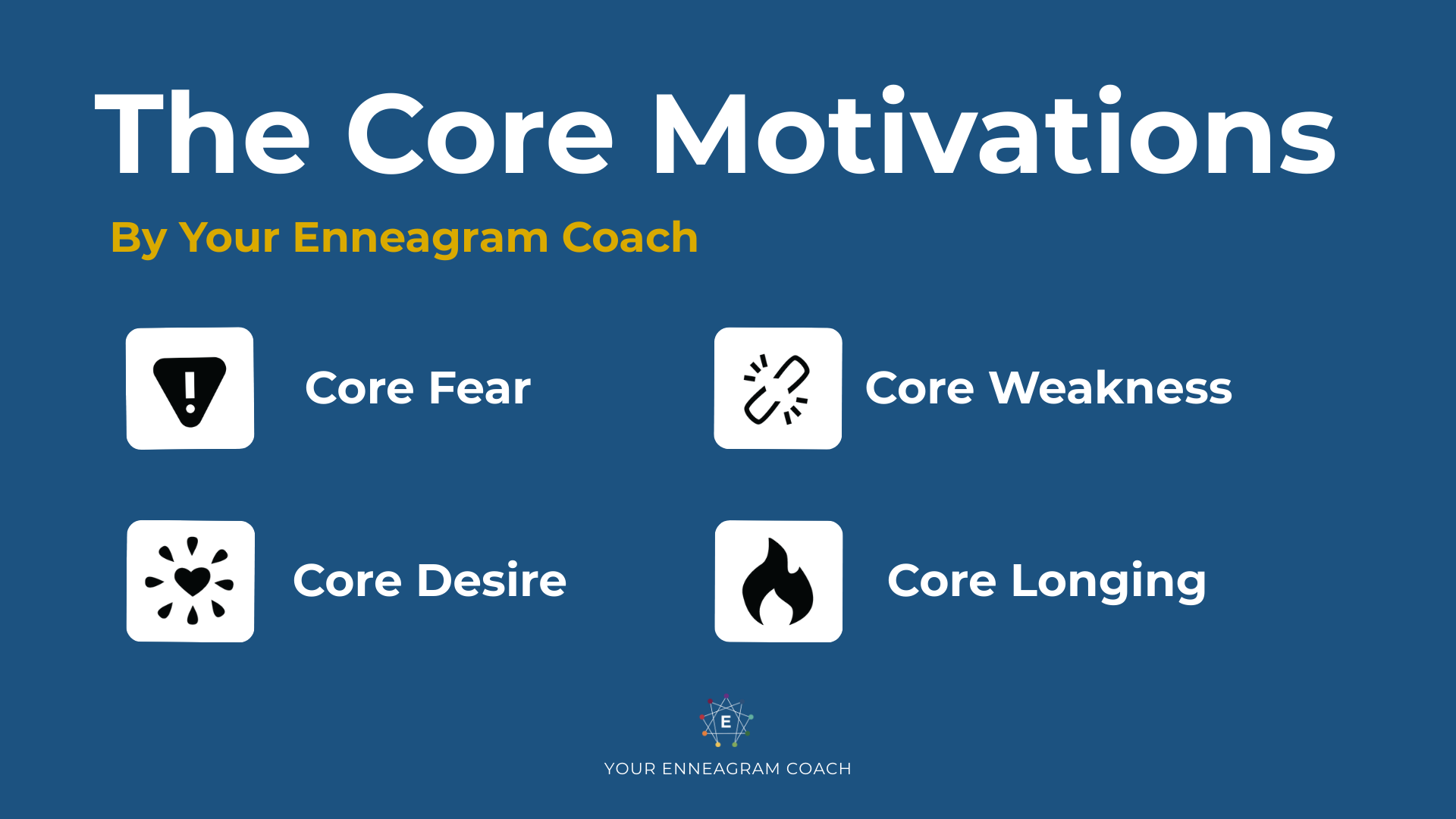
The four Core Motivations are the driving forces behind why each type thinks, feels, and behaves in particular ways.
At Your Enneagram Coach, we always start with the Core Motivations because they are the why behind everything we do. Whether it's how we communicate, handle conflict, or express love, our Core Fear, Desire, Weakness, and Longing shape our relational patterns. When we understand what’s really driving our own behavior—and our partner’s—we can move from frustration to empathy, and from disconnection to deeper connection.
Here are the icons that YEC uses to represent the Core Motivations throughout their work.
Type 6
- Core Fear: Feeling fear itself, being without support, security, or guidance; being blamed, targeted, alone, or physically abandoned.
- Core Desire: Having security, guidance, and support.
- Core Weakness: Anxiety—Scanning the horizon of life and trying to predict and prevent negative outcomes (especially worst-case scenarios); remaining in a constant state of apprehension and worry.
- Core Longing: “You are safe and secure.”
Type 8
- Core Fear: Being weak, powerless, harmed, controlled, vulnerable, manipulated, and left at the mercy of injustice.
- Core Desire: Protecting yourself and those in your inner circle.
- Core Weakness: Lust/Excess—Constantly desiring intensity, control, and power; pushing yourself willfully on life and people to get what you desire.
- Core Longing: “You will not be betrayed.”
The Dance 💃🏽🕺🏼
We created the Dance to show the relational dynamics between two Enneagram types.
The Dance can give you great insight into why you and your partner keep running into the same conflicts over and over again, and help you break free from the unhealthy communication cycles you often repeat.
Understanding "The Dance" in Any Relationship
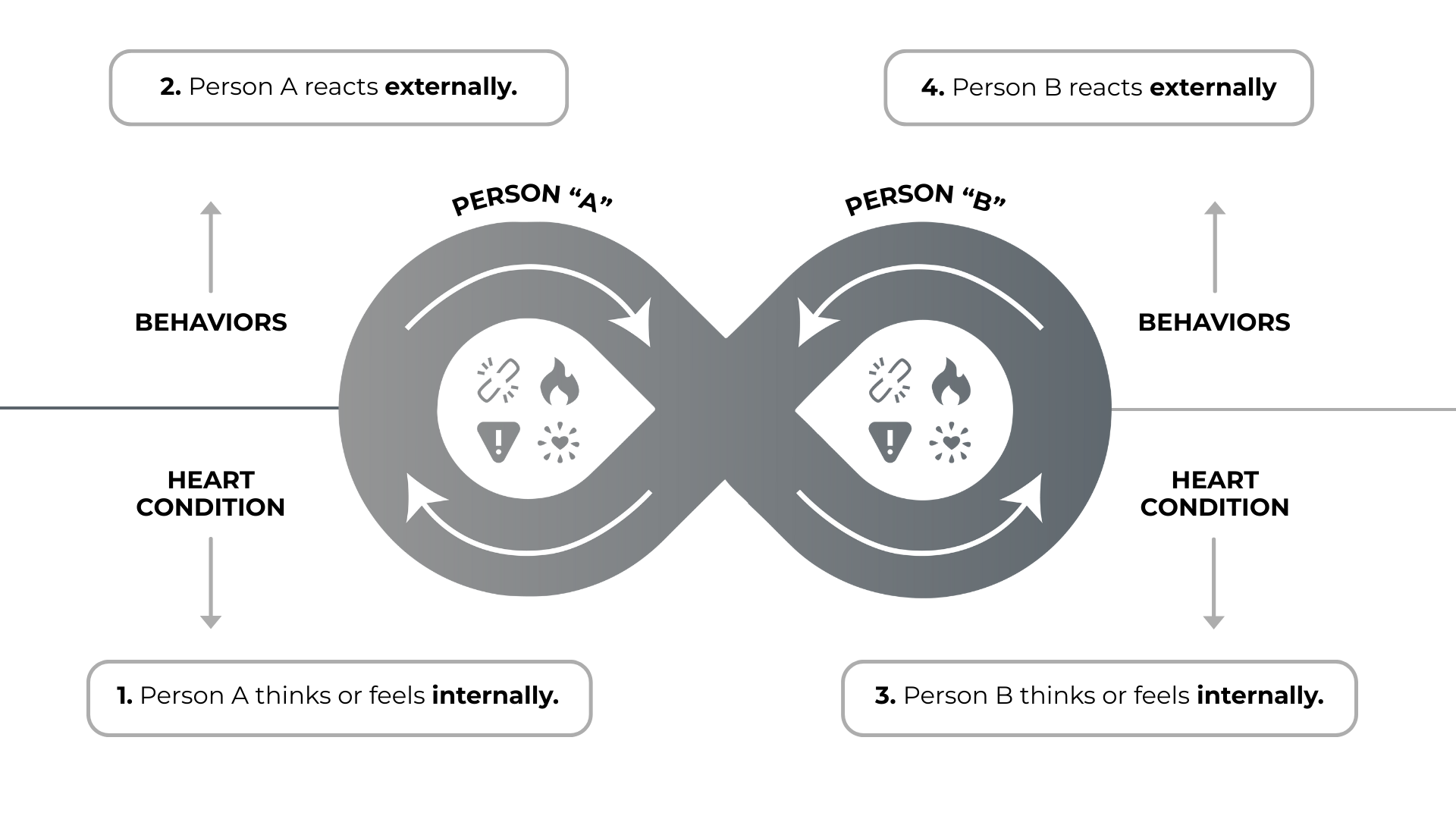
The Dance Diagram (an infinity loop) helps you visualize what’s really happening beneath the surface in any relationship—whether with a spouse, friend, co-worker, or family member.
It shows how each person’s reactions are shaped by their Core Motivations—their Core Fear, Desire, Weakness, and Longing.
We all see life through our unique lens, interpreting and reacting based on how aligned (healthy) or misaligned (unhealthy) we are in the moment.
In the diagram:
- Each loop represents one person in the relationship.
- Inside each person’s loop is their Core Motivations (Core Fear, Desire, Weakness, and Longing).
- Below the line is what’s happening internally—your thoughts, emotions, and Core Motivations (unseen by the other person).
- Above the line is what’s happening externally—your words, tone, and behavior (what the other person does see).
When we don’t consider the hidden motivations below the surface, we often misjudge behaviors and miss what’s really going on. That’s when disconnection happens.
Here’s how The Dance flows:
- Person A thinks or feels internally
- Person A reacts externally
- Person B thinks or feels internally
- Person B reacts externally
🌀 And the cycle continues—until someone becomes aware, pauses, and chooses a healthier response. That’s where real connection begins.
Understanding this cycle provides a practical way to identify what’s truly happening in moments of tension, and to respond with empathy, clarity, and compassion instead of reactivity or assumptions. This is how you begin to create meaningful change in every relationship.
Here is an example of a misaligned dance for Type 6 and Type 8:
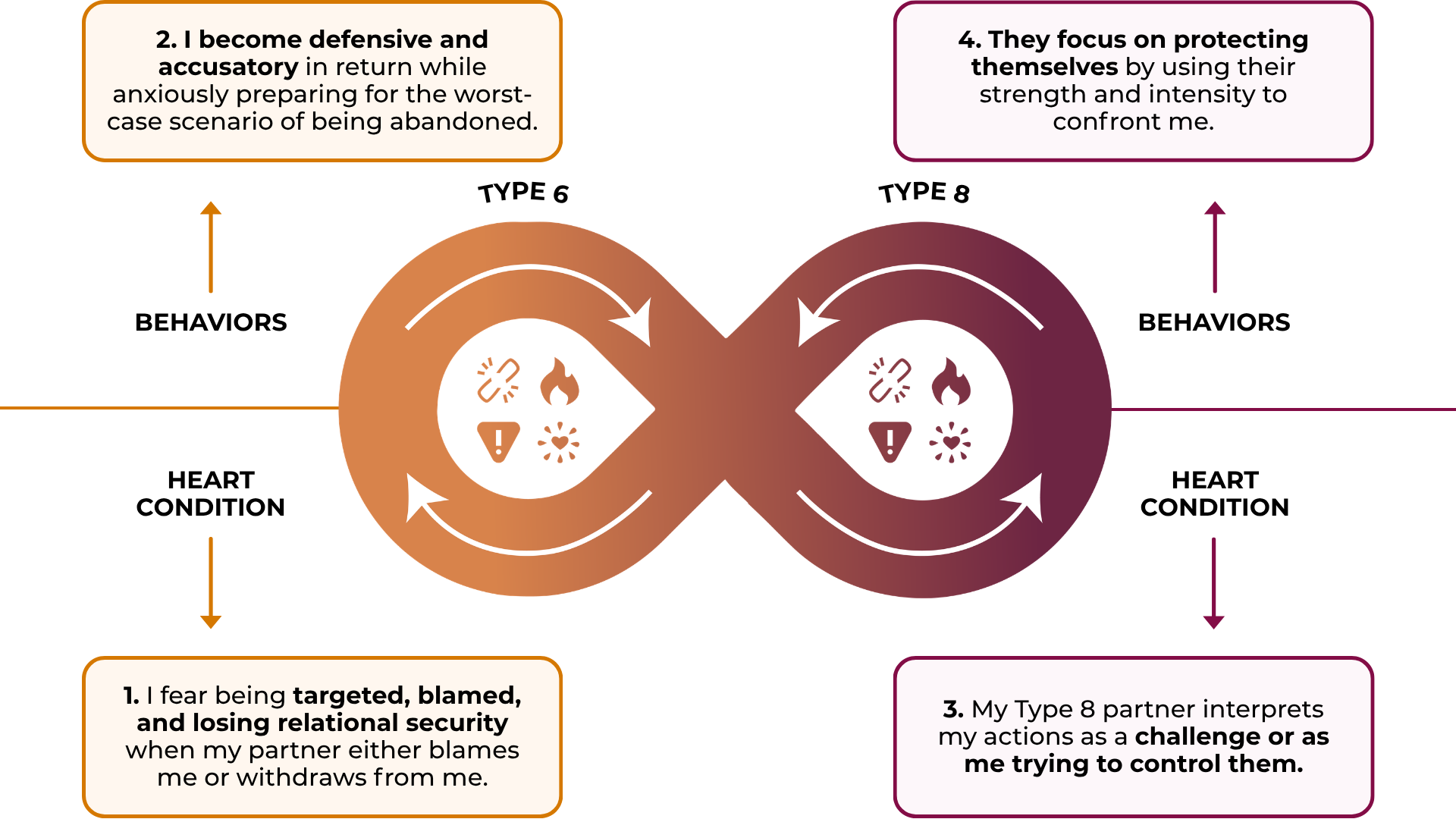
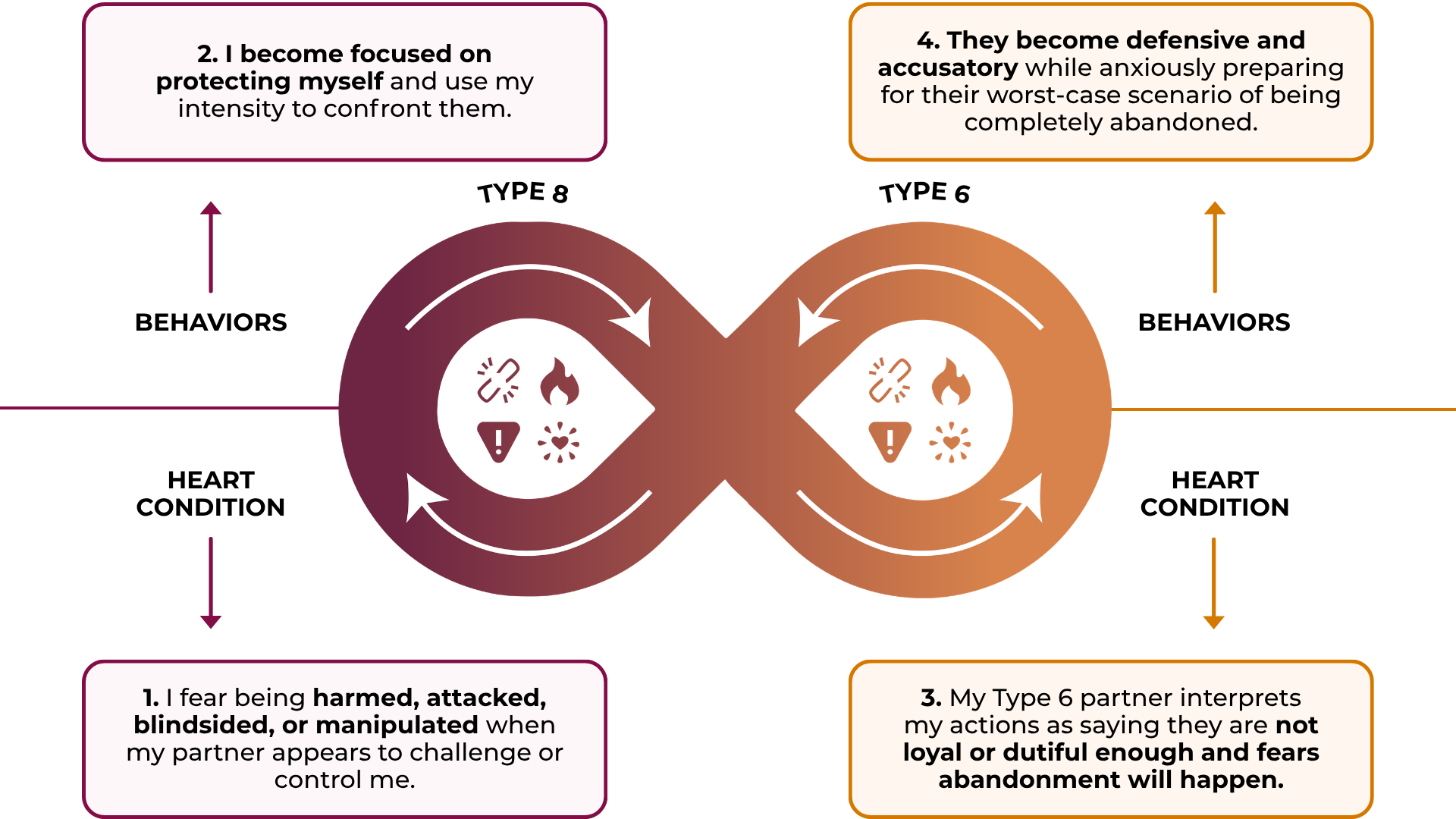
When we’re misaligned, we often engage in a relational dance driven by fear, unmet desires, and unconscious attempts to get our core needs met—usually by expecting our partner to do what only inner growth can provide. This can lead to frustration, disconnection, or even resentment.
But when we become more aligned with who we are and grow in self-awareness, the dynamic shifts. Here is an example of an aligned dance for Type 6 and Type 8:
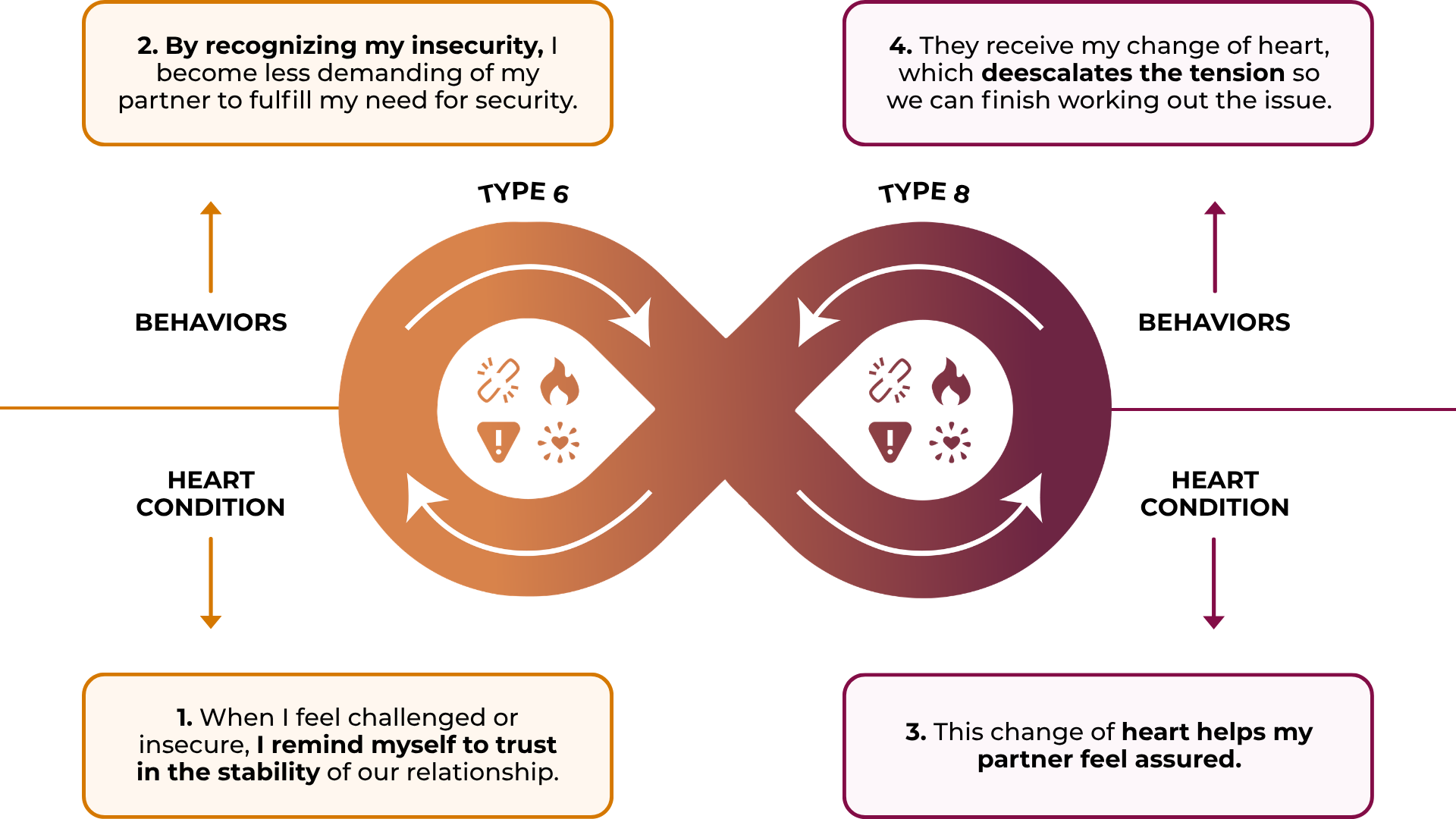
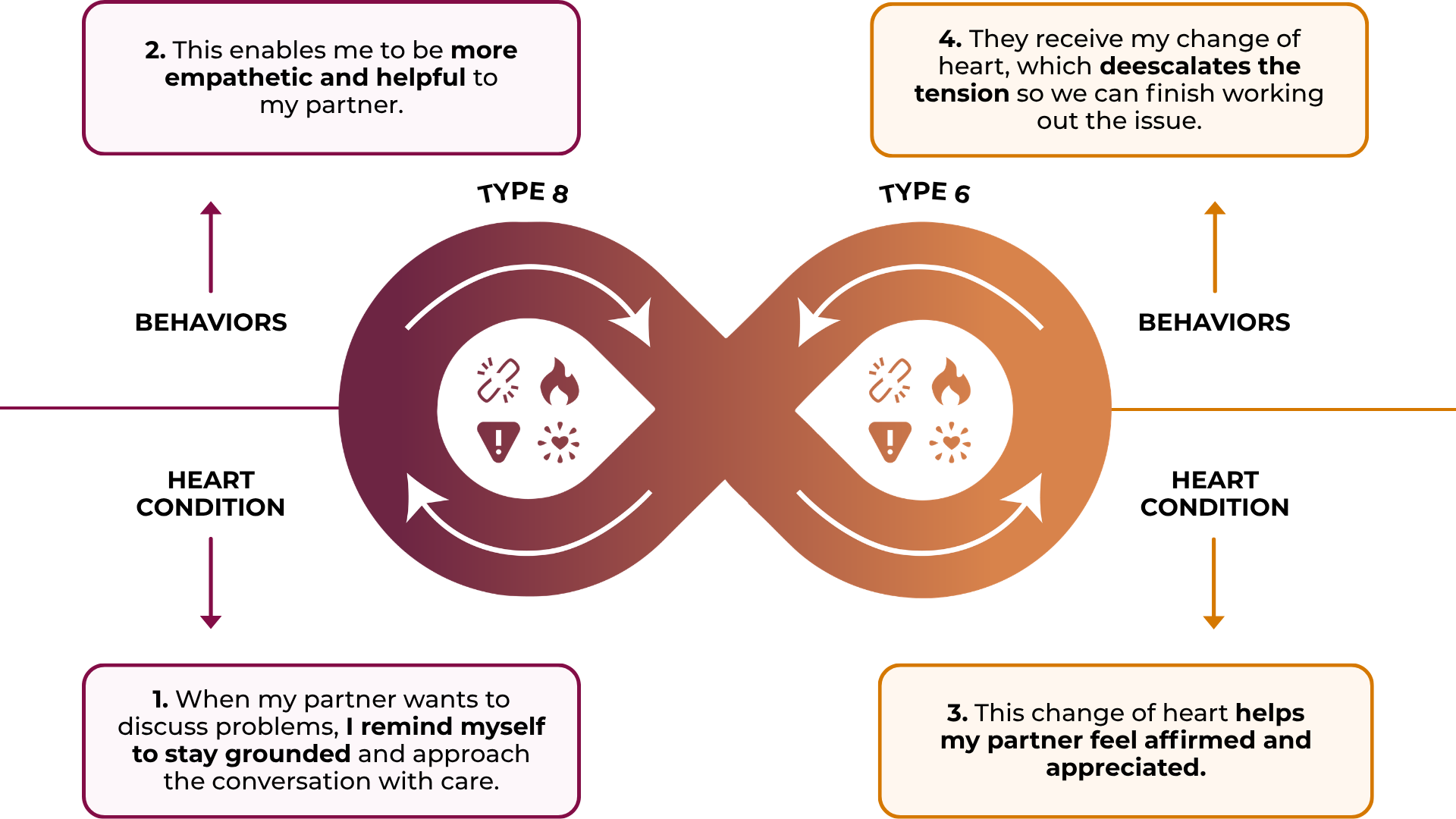
When we are aligned, we begin to recognize our Core Motivations in real time and stop placing the full weight of them on our partner. Instead, we show up with curiosity, grace, and a deeper understanding of what we (and our partner) truly need, creating space for a more balanced, supportive, and connected relationship.
Want to learn more about the dance and how it can help your relationship thrive? Explore our type-specific couple courses—designed to help you grow together with more clarity and connection. Click the link at the bottom of the page to get started!
The Strengths of a Type 6 + Type 8 Relationship 💪
- A Balance of Loyalty and Strength: Type 6's bring devotion, reliability, and a commitment to protecting what matters, while Type 8's bring confidence, decisiveness, and bold leadership. Together, they create a relationship that feels both secure and powerful: the Type 8 offers courage and direction, and the Type 6 provides steadfast support and foresight.
- Complementary Strengths: The Type 6’s ability to anticipate challenges and stay prepared pairs well with the Type 8’s ability to act decisively and confront obstacles head-on, giving the relationship both wisdom and momentum.
- Shared Value of Protection: Both types prioritize safeguarding their people and values. This creates a strong “us against the world” mentality rooted in loyalty and trust.
- Strength Meets Commitment: Type 8's provide assertiveness and protection, while Type 6's offer consistency and dedication. Together, they build a partnership that feels resilient, dependable, and hard to shake.
When both are healthy, this relationship blends courage with loyalty, creating a bond that feels safe, strong, and deeply committed.
The Challenges of a Type 6 + Type 8 Relationship 💔
- Security vs. Control: Type 6's may seek reassurance and predictability, while Type 8's may assert control to feel safe, which can lead to power struggles.
- Fear vs. Intensity: Type 6's may spiral into worry or suspicion, while Type 8's may escalate intensity or confrontation, amplifying tension.
- Different Responses to Vulnerability: Type 6's often express fear openly, while Type 8's may avoid vulnerability by maintaining a strong, dominant stance, which can lead to misunderstandings.
- Conflict Escalation: Type 6's may press for answers and clarity, while Type 8's may push back forcefully, leaving both feeling unheard or unsafe.
Without awareness, this pairing can slip into cycles of fear and force, one anxious, the other overpowering.
How Their Core Struggles Affect the Relationship ⚠️
When the Type 6’s fear meets the Type 8’s need for control, their struggles can intensify:
- Type 6's may become hyper-vigilant, questioning motives and loyalty.
- Type 8's may respond with dominance, defensiveness, or emotional shutdown.
- Both may misinterpret each other’s intentions: Fear looks like mistrust, strength looks like threat.
- This dynamic can create a push-pull pattern, with the Type 6 seeking safety and the Type 8 pushing for authority.
Over time, the relationship risks becoming tense, with one bracing for betrayal and the other for challenge.
Breaking the Cycle ♾️: Finding Balance Through Strength and Reassurance
To thrive together, Type 6's and Type 8's must soften fear and power with trust. Here’s how:
- Build reassurance intentionally: Type 8's can offer consistency and follow-through, while Type 6's can practice trusting what’s already been shown.
- Name fears and boundaries clearly: Type 6's should voice concerns without accusation, while Type 8's should share limits without intimidation.
- Balance strength with tenderness: Type 8's can lead with protection rather than control, while Type 6's can lean into courage instead of doubt.
- Slow conflict escalation: Pause before reacting. Intensity and anxiety both soften with time and presence.
- Honor loyalty: Recognize and affirm how deeply both partners are committed to the relationship.
When trust replaces fear and control, this pairing becomes incredibly resilient.
The Role of Communication in Building a Stronger Bond 💬
For this couple, communication must bridge anxiety and control:
- Be direct and grounded: Avoid testing or dominating; say what you mean clearly.
- Reassure without overpowering: Type 8's can offer stability without force, and Type 6's can ask for reassurance without interrogation.
- Validate emotions: Fear and anger are both protective responses; acknowledge them without judgment.
- Stay relational during conflict: Don’t fight to win; fight to understand.
With intentional communication, both partners can feel protected, respected, and emotionally safe.
How Growth and Self-Awareness Strengthen the Relationship 🌱
This pairing thrives when both partners can:
- Type 6's build inner confidence: Trusting themselves reduces fear-based reactions.
- Type 8's practice vulnerability: Letting their guard down deepens intimacy and trust.
- Together, they channel strength toward protection, not control: Creating a partnership rooted in mutual respect.
Choose courage over reactivity: Facing challenges together builds unity and resilience.
Final Thoughts: A Partnership of Courage and Loyalty 💗
At their best, a Type 6 and a Type 8 form a powerful, unshakable partnership. The Type 6 brings loyalty, preparedness, and commitment, while the Type 8 offers strength, leadership, and protection. But to flourish, they must resist the pull of fear and force. By building trust, softening intensity, and choosing reassurance over control, this couple can create a relationship that feels both deeply secure and fiercely strong.
What’s next:
If you’re ready to grow closer and finally understand the unique dynamics of your relationship, the Becoming Us course is your next best step. This personalized experience is tailored to your exact Enneagram Type pairing, walking you through eight transformational modules and a beautifully designed 64-page guidebook that reveals how your personalities dance together, both when you're aligned and when you're misaligned.
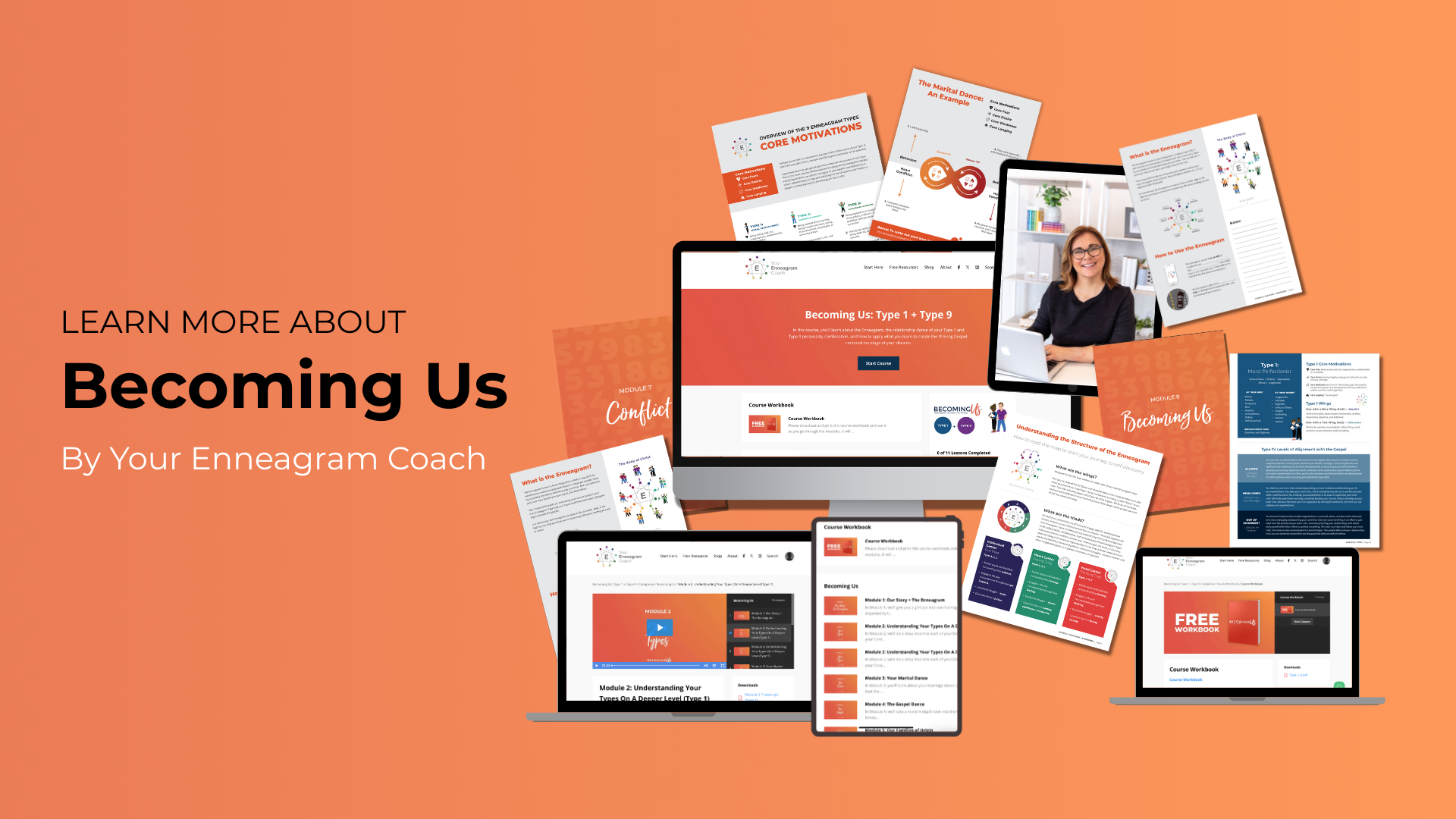
You'll discover the deeper reasons behind your patterns, gain language to navigate conflict with compassion, and find the clarity and direction you’ve been craving. Couples say they finally feel seen, understood, and equipped—and we know you will too. Your relationship is worth investing in. Take advantage of the special sale and start your Becoming Us journey today. Click here to learn more.💛
Other Great Next Steps:
|
Get astonishing clarity with your couple-type Becoming Us course |
We would love to share some free Enneagram resources with you.