
Type 1 + Type 7 Compatibility 💙: Finding Balance Between Structure and Spontaneity
Jan 11, 2026
A relationship between an Enneagram Type 1 and Type 7 can be dynamic, exciting, and full of growth. Type 1 brings discipline, structure, and a strong sense of responsibility, while Type 7 offers enthusiasm, adventure, and a desire for variety. Together, they can balance each other out—Type 1 provides direction, and Type 7 offers joy and possibility.
But how compatible are Type 1 and Type 7 in a romantic relationship? While both types are driven to create something meaningful in their lives, their contrasting approaches can create both opportunities for growth and sources of tension. Let’s explore what makes this pairing work—and where challenges may arise.
Understanding the Type 1 and Type 7 Personality in Relationships 💑🏻
Type 1s, also known as the Principled Reformer or Perfectionist, are disciplined and committed to doing what is right. Their core desire is to be good and ethical, while their core fear is being seen as bad, corrupt, or flawed. They have a strong inner critic that constantly evaluates their own actions, and that same critical voice can sometimes turn outward, leading them to judge their partner’s behavior or emotional expression if it doesn’t align with their ideals.
Type 7s, also known as the Enthusiastic Optimist or Entertainer, are spontaneous, fun-loving, and always looking for new experiences. Their core desire is to be happy and free, while their core fear is being trapped in pain or boredom. They are optimistic and full of energy, always seeking excitement and the next adventure, but can sometimes struggle to slow down, sit with discomfort, or follow through when things get tough.
The Core Motivations of Type 1 and Type 7:
The four Core Motivations are the driving forces behind why each type thinks, feels, and behaves in particular ways. At Your Enneagram Coach, we always start with the Core Motivations because they are the why behind everything we do. Whether it's how we communicate, handle conflict, or express love, our Core Fear, Desire, Weakness, and Longing shape our relational patterns. When we understand what’s really driving our own behavior—and our partner’s—we can move from frustration to empathy, and from disconnection to deeper connection.
Type 1
- Core Fear: Being wrong, bad, evil, inappropriate, unredeemable, or corruptible.
- Core Desire: Having integrity, being good, balanced, accurate, virtuous, and right.
- Core Weakness: Resentment—Repressing anger that leads to continual frustration and dissatisfaction with yourself, others, and the world for not being perfect.
- Core Longing: “You are good.”
Type 7
- Core Fear: Being deprived, trapped in emotional pain, limited, or bored; missing out on something fun.
- Core Desire: Being happy, fully satisfied, and content.
- Core Weakness: Gluttony—Feeling a great emptiness inside and having an insatiable desire to “fill yourself up” with experiences and stimulation in hopes of feeling completely satisfied and content.
- Core Longing: “You will be taken care of.”
The Dance 💃🏽🕺🏼
We created the Dance to show the relational dynamics between two Enneagram types. The Dance can give you great insight into why you and your partner keep running into the same conflicts over and over again, and help you break free from the unhealthy communication cycles you often repeat.
Understanding "The Dance" in Any Relationship
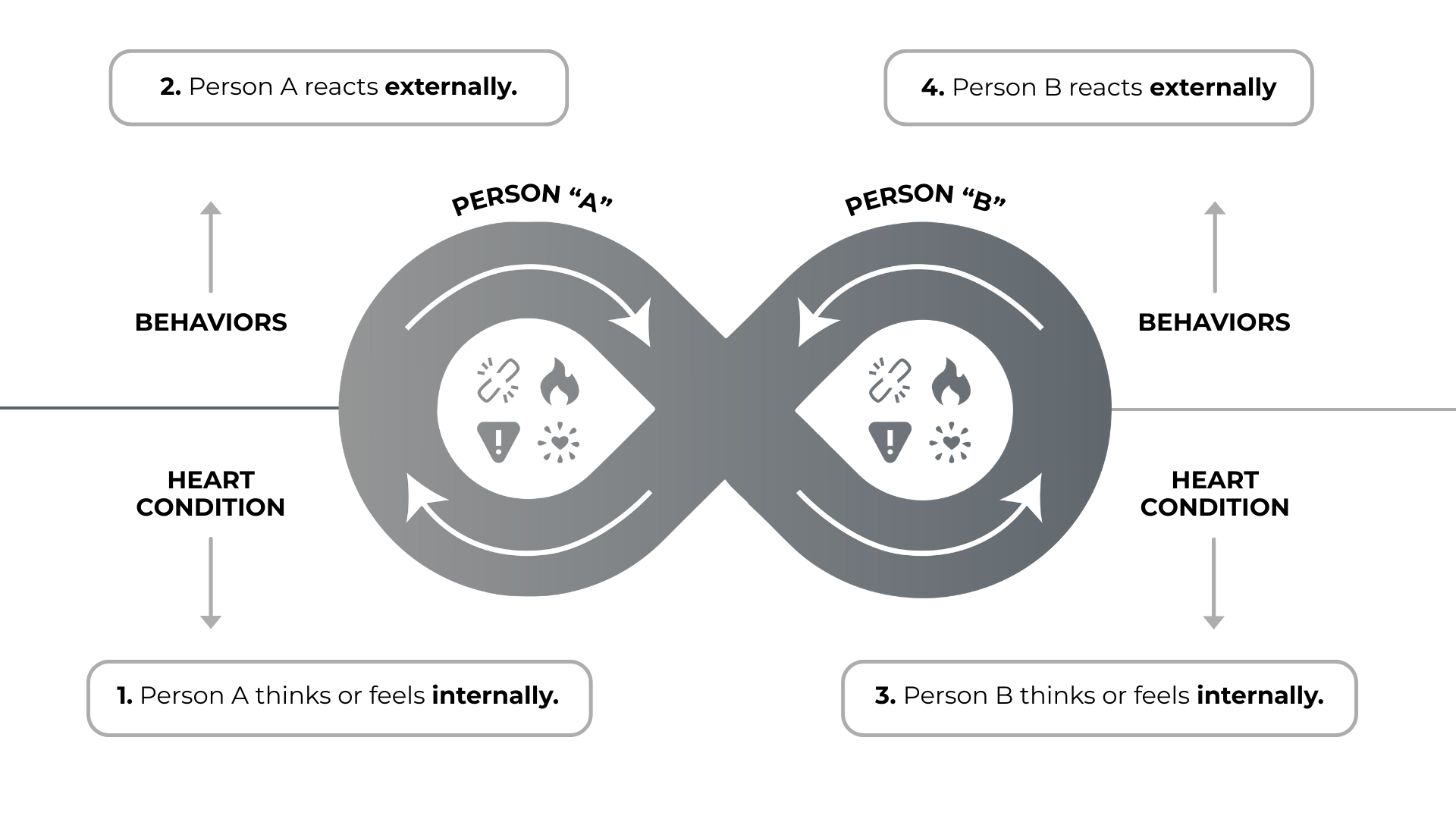
The Dance Diagram (an infinity loop) helps you visualize what’s really happening beneath the surface in any relationship—whether with a spouse, friend, co-worker, or family member. It shows how each person’s reactions are shaped by their Core Motivations—their Core Fear, Desire, Weakness, and Longing.
We all see life through our unique lens, interpreting and reacting based on how aligned (healthy) or misaligned (unhealthy) we are in the moment.
In the diagram:
- Below the line is what’s happening internally—your thoughts, emotions, and Core Motivations (unseen by the other person).
- Above the line is what’s happening externally—your words, tone, and behavior (what the other person sees).
When we fail to consider the hidden motivations beneath the surface, we often misjudge behaviors and miss what is truly happening. That’s when disconnection happens.
Here’s how The Dance flows:
- Person A thinks or feels internally
- Person A reacts externally
- Person B thinks or feels internally
- Person B reacts externally
🌀 And the cycle continues—until someone becomes aware, pauses, and chooses a healthier response. That’s where real connection begins.
Understanding this cycle provides a practical way to identify what’s truly happening in moments of tension, and to respond with empathy, clarity, and compassion instead of reactivity or assumptions. This is how you begin to create meaningful change in every relationship.
Here are examples of a misaligned dance for Type 1 and Type 7:

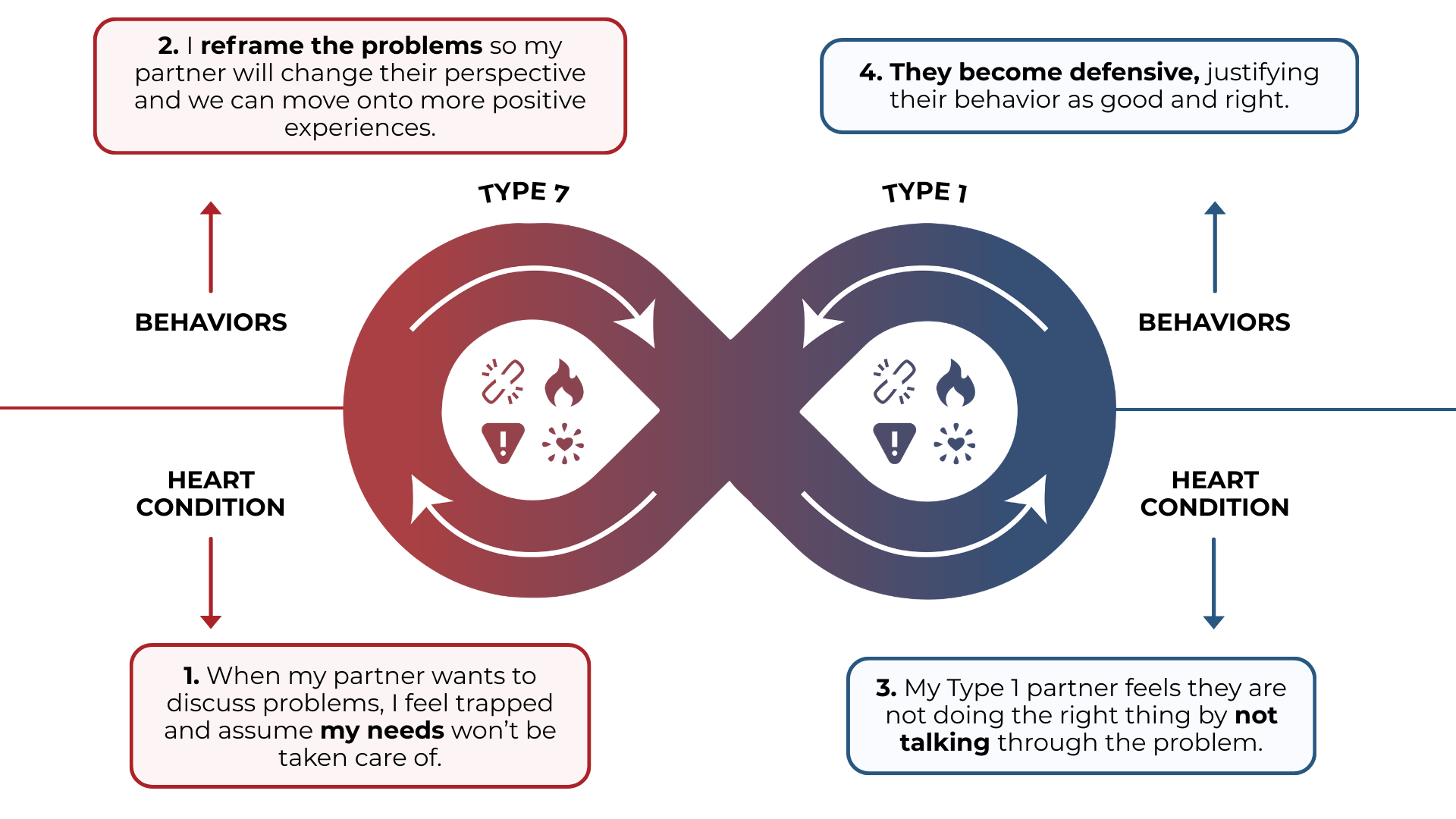
When we’re misaligned, we often engage in a relational dance driven by fear, unmet desires, and unconscious attempts to get our core needs met—usually by expecting our partner to do what only inner growth can provide. This can lead to frustration, disconnection, or even resentment.
But when we become more aligned with who we are and grow in self-awareness, the dynamic shifts. Here are examples of an aligned dance for Type 1 and Type 7:
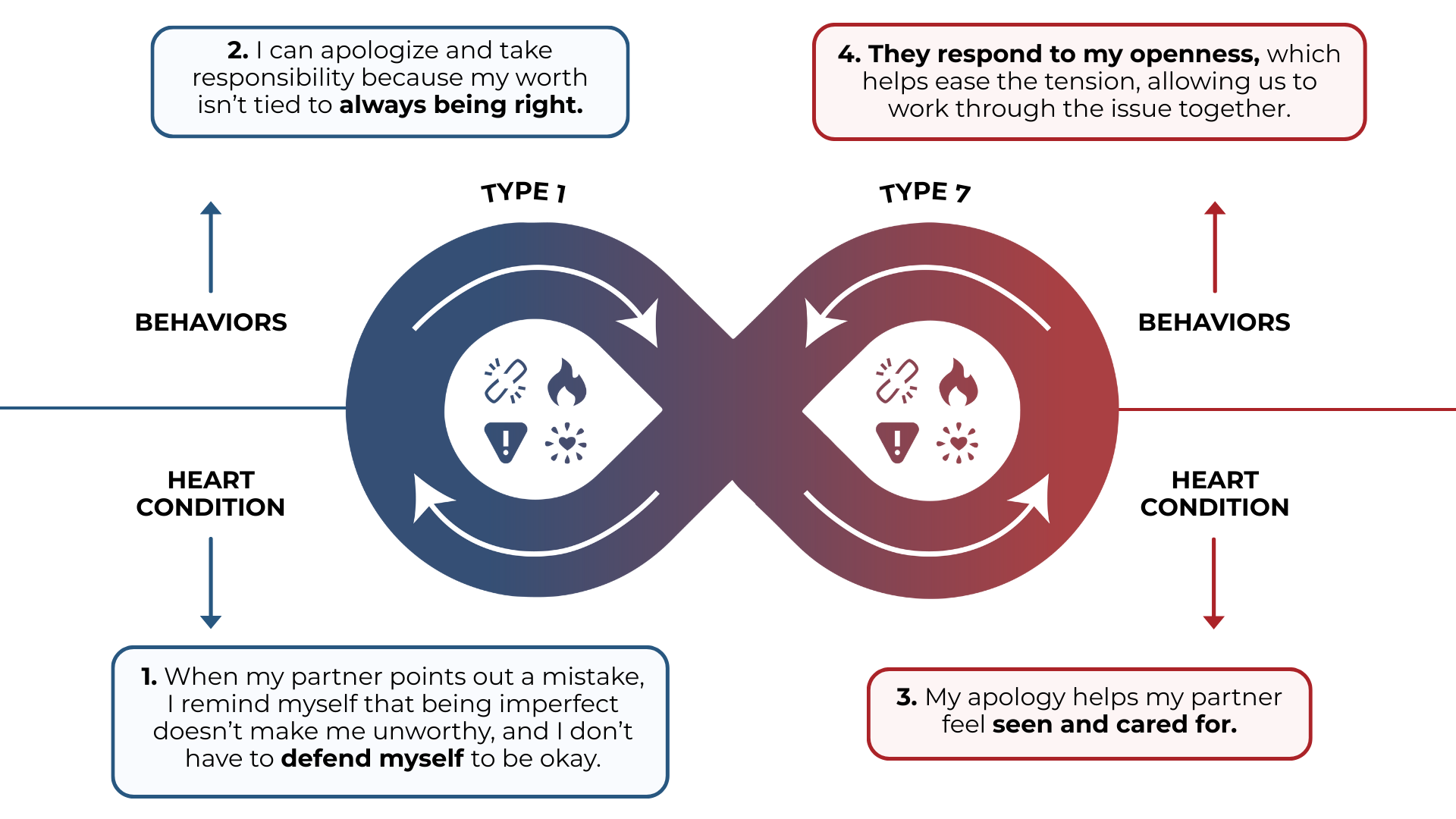
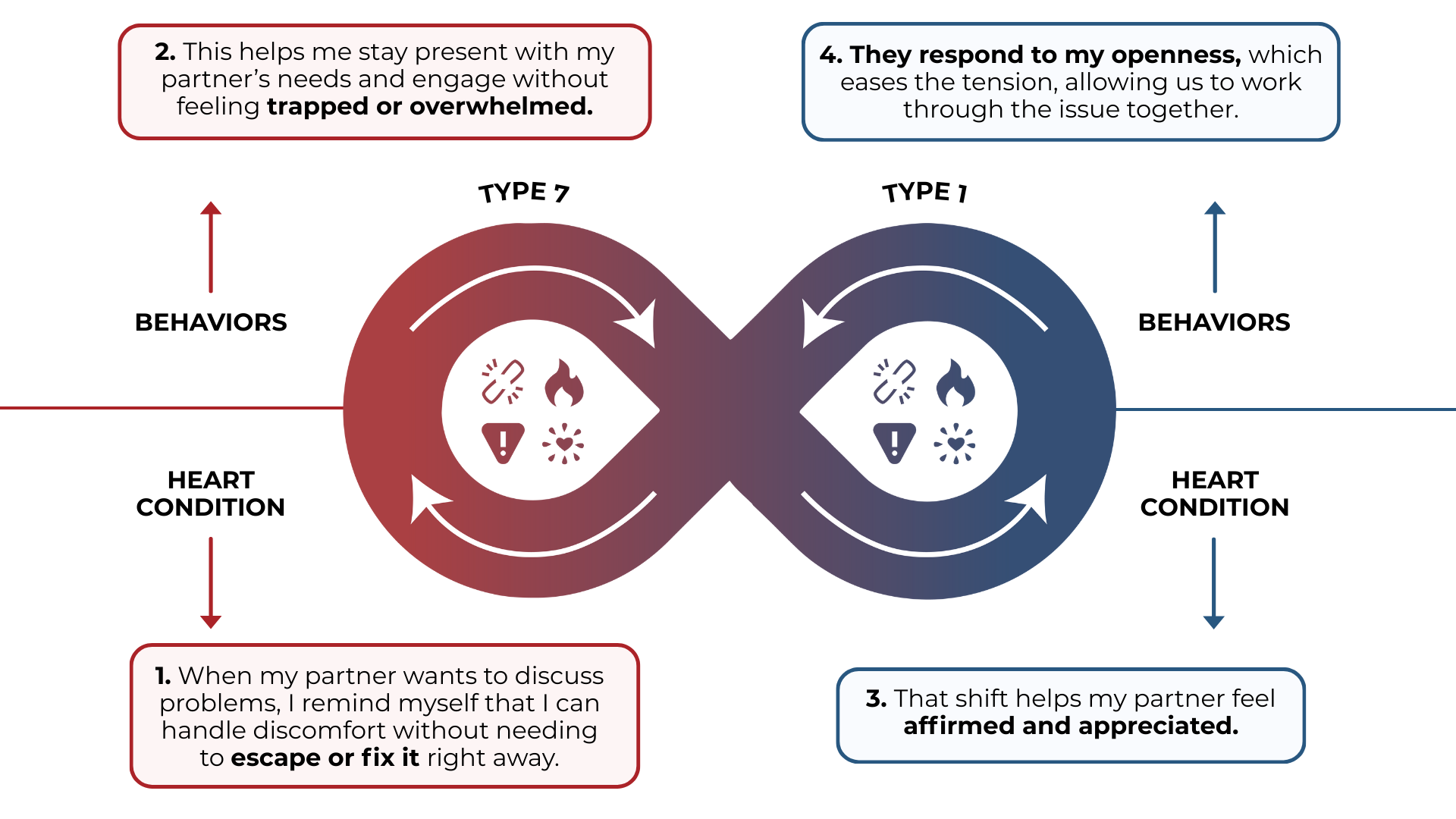
When we are aligned, we begin to recognize our Core Motivations in real time and stop placing the full weight of them on our partner. Instead, we show up with curiosity, grace, and a deeper understanding of what we (and our partner) truly need, creating space for a more balanced, supportive, and connected relationship.
Want to learn more about the dance and how it can help your relationship thrive? Explore our type-specific couple courses—designed to help you grow together with more clarity and connection. Click the link at the bottom of the page to get started!
The Strengths of a Type 1 + Type 7 Relationship 💪
- Balance of Responsibility and Fun: Type 1 brings structure and reliability, while Type 7 brings lightness and joy. Together, they can create a well-rounded and fulfilling partnership.
- Growth-Oriented: Both are focused on self-improvement—Type 1 with their values and Type 7 with their exploration. They can encourage each other to grow and pursue new possibilities.
- Shared Vision for the Future: While Type 1 may focus on the ideal, Type 7 can help bring it to life with creativity and innovation. They can work together to create a future they both share a vision for.
- Mutual Inspiration: Type 7’s adventurous spirit can inspire Type 1 to relax and enjoy life more, while Type 1’s sense of purpose can help Type 7 channel their energy into meaningful endeavors.
Together, they can create a dynamic relationship that is both exciting and grounded.
The Challenges of a Type 1 + Type 7 Relationship 💔
- Structure vs. Spontaneity: Type 1 seeks order and consistency, while Type 7 craves freedom and spontaneity. This can lead to frustration if Type 7 feels constrained or Type 1 feels their efforts aren’t being respected.
- Emotional Disconnect: Type 1 may find Type 7’s constant need for excitement distracting, while Type 7 may feel stifled by Type 1’s desire for things to be “right.” This can create emotional distance if neither party makes an effort to meet in the middle.
- Avoidance vs. Perfectionism: Type 1’s drive for perfection can clash with Type 7’s instinct to sidestep discomfort or negativity. Tension can build when Type 1 feels like they’re carrying the weight of responsibility.
- Hard Conversations: Type 7 may avoid difficult conversations or uncomfortable feelings, while Type 1 may feel compelled to confront issues head-on. If these differences are not acknowledged, it can lead to unresolved issues that erode trust.
If these challenges aren’t addressed, the relationship may feel like a tug-of-war between responsibility and freedom.
How Their Core Struggles Affect the Relationship ⚠️
When Type 1’s deep sense of responsibility meets Type 7’s craving for freedom, their different priorities can create friction and disconnect.
This can show up as:
- Type 1 Feeling Overwhelmed or Frustrated: Type 1 may feel burdened by Type 7’s spontaneity or lack of follow-through, worrying that important responsibilities are being neglected.
- Type 7 Feeling Criticized or Controlled: Type 7 may experience Type 1’s feedback as nitpicky or limiting, and pull away to protect their sense of freedom.
- Conflicting Needs for Structure and Spontaneity: Type 1 values routine, order, and doing things the “right” way. Type 7 thrives on flexibility, novelty, and fun. Without mutual understanding, they may feel like they’re living in two different realities.
If they don’t make space for both structure and freedom, the relationship can start to feel like a tug-of-war instead of a partnership.
Breaking the Cycle ♾️: Shifting from Unconscious Habits to Intentional Connection
The good news? A Type 1 + Type 7 relationship can thrive when both partners make an effort to understand and embrace their differences.
- Create Room for Adventure: Type 7 can encourage Type 1 to take breaks and enjoy the present moment, while Type 1 can loosen their grip on perfectionism and embrace some spontaneity.
- Balance Fun with Responsibility: Type 1 can help Type 7 stay grounded and make progress toward their goals, while Type 7 can practice more focus and follow-through in their commitments.
- Accept Differences in Emotional Expression: Type 7 can practice being more honest and vulnerable about their feelings, while Type 1 can work on relaxing their inner critic and embracing imperfection.
- Celebrate Growth Together: Recognize that growth in this relationship happens when both partners are willing to lean into discomfort and stretch beyond their natural tendencies.
By embracing these changes, a Type 1 + Type 7 couple can create a relationship that is both grounded in integrity and full of joy—a partnership where both feel inspired, supported, and challenged to grow.
The Role of Communication in Building a Stronger Bond 💬
Good intentions can still lead to misunderstanding. Here’s how to stay connected:
- Stay Open to Different Perspectives: Recognize that both partners bring valuable perspectives to the relationship—Type 1’s structured approach and Type 7’s creative energy.
- Acknowledge Feelings: Type 7 should work on expressing deeper emotions, and Type 1 can offer more patience when listening.
- Check in About Expectations: Openly communicate about the balance between fun and responsibility to ensure both partners feel understood and supported.
How Growth and Self-Awareness Strengthen the Relationship 🌱
- Reflect on Personal Growth: Type 1 can explore where rigidity might be holding them back, while Type 7 can examine how avoidance manifests.
- Embrace Flexibility: Be willing to adjust expectations and try new ways of navigating challenges.
- Foster Empathy: Learn to spot the deeper needs beneath each other’s behavior—like Type 1’s desire for integrity or Type 7’s need for freedom—to build trust and emotional safety.
- Balance Fun with Follow-Through: Make space for spontaneity and shared responsibility—so both partners feel supported, not stifled.
Final Thoughts: Trusting Each Other’s Strengths 💗
At their best, a Type 1 and Type 7 relationship is a dynamic mix of structure and spontaneity, where both partners inspire and challenge each other to grow. The key to success is learning to trust each other’s strengths and be open to compromise. When both partners embrace their differences with patience and empathy, their connection can be rooted in deep mutual respect and joy.
What’s next:
If you’re ready to grow closer and finally understand the unique dynamics of your relationship, the Becoming Us course is your next best step. This personalized experience is tailored to your exact Enneagram Type pairing, walking you through eight transformational modules and a beautifully designed 64-page guidebook that reveals how your personalities dance together, both when you're aligned and when you're misaligned.
You'll discover the deeper reasons behind your patterns, gain language to navigate conflict with compassion, and find the clarity and direction you’ve been craving. Couples say they finally feel seen, understood, and equipped—and we know you will too. Your relationship is worth investing in. Take advantage of the special sale and start your Becoming Us journey today. Click here to learn more. 💛
Other Great Next Steps:
|
Get astonishing clarity with your couple-type Becoming Us course |
|
We would love to share some free Enneagram resources with you.